
Amice
Unknown Artist
16th or 17th century
Medium
Silk; metal; linen
Dimensions
7 1/4 x 26 3/8 in. (18.4 x 67 cm) with fringe
Classification
Textiles-Ecclesiastical
Culture
Spanish
Department
Robert Lehman Collection
Museum
Metropolitan Museum of Art, New York, NY
Credit
Robert Lehman Collection, 1975
Accession Number
1975.1.1890B
Rights
Public Domain
Art Historical Context
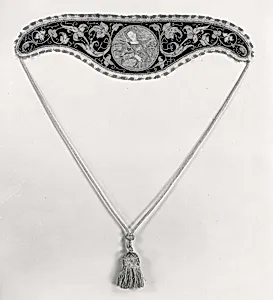
This exquisite *Amice* from 16th- or 17th-century Spain is a rare survivor of ecclesiastical textiles, crafted for use in Catholic liturgy. Worn by clergy draped over the shoulders and fastened at the chest, it served both practical and symbolic purposes, protecting outer vestments while signifying humility and purity. Measuring just 7¼ x 26⅜ inches with delicate fringe, its compact form highlights the intimate craftsmanship of the era. Luxuriously woven from silk, metal threads, and linen, the amice exemplifies Spanish textile artistry during the Golden Age, a time when opulent embroidery adorned church garments amid the Counter-Reformation's emphasis on visual splendor. The interplay of shimmering metal with fine silk and sturdy linen reflects advanced weaving and embroidery techniques, likely produced in workshops patronized by the Church or nobility. Though the artist remains unknown, such pieces were collaborative feats of skilled artisans. Housed in the Robert Lehman Collection at The Metropolitan Museum of Art since 1975, this amice offers a tactile glimpse into Spain's devout material culture, where textiles bridged the divine and the everyday. Visitors will appreciate its preserved elegance, a testament to centuries of reverence.