
Belt Plate
Unknown Artist
late 7th century
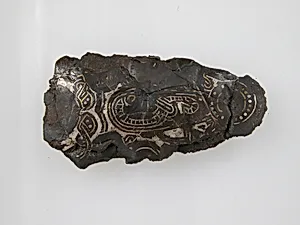
Medium
Iron, silver inlay, brass inlay
Dimensions
Overall: 2 15/16 x 1 9/16 x 3/8 in. (7.5 x 3.9 x 1 cm)
Classification
Metalwork-Iron
Culture
Frankish
Department
Medieval Art
Museum
Metropolitan Museum of Art, New York, NY
Credit
Gift of J. Pierpont Morgan, 1917
Accession Number
17.193.240
Rights
Public Domain
Art Historical Context
This exquisite belt plate, crafted by an unknown Frankish artisan in the late 7th, exemplifies the refined metalworking skills of the Merovingian period. Made of iron with intricate silver and brass inlays, it measures a modest 2 15/16 x 1 9/16 x 3/8 inches, yet its delicate decoration speaks volumes about early luxury. Such fittings adorned the belts of elites, serving both practical and symbolic purposes as markers of status and wealth. In Frankish society, transitioning from the Roman world to the early Middle Ages, belt plates like this were often found in high-status burials, highlighting the warrior aristocracy's taste for opulent personal adornments. The technique of inlaying silver and brass into iron—likely through cutting channels and hammering in the softer metals—demonstrates advanced craftsmanship, blending durability with shimmering ornamentation reminiscent of late antique traditions. Today, housed in the Metropolitan Museum of Art's Medieval Art department (gift of J. Pierpont Morgan, 1917), this artifact offers a tangible glimpse into Frankish daily life and cultural transitions, bridging pagan and Christian influences in 7th-century Europe.