
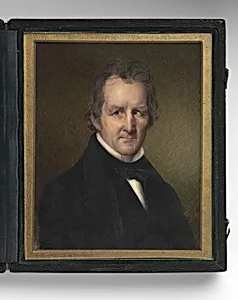
Benjamin Tappan
Medium
Painting
Classification
Painting
Department
Smithsonian Collection
Museum
Smithsonian American Art Museum
Credit
National Portrait Gallery, Smithsonian Institution; gift of Mary Louise and Benjamin Wright Conserved with funds from the Smithsonian Women's Committee
Accession Number
NPG.98.78
Rights
Public Domain
Tags
About this artwork
Benjamin T. Wright, Belmont, Mass., great-great grandson of sitter; gift 1998 NPG
Art Historical Context
This exquisite miniature portrait, titled *Benjamin Tappan* and painted around 1839 by Washington Blanchard (8–?), captures the distinguished likeness of the Ohio lawyer and statesman. Blanchard, a skilled itinerant artist known for his detailed small-scale works, renders Tappan with a keen eye for character, highlighting his thoughtful gaze and formal attire. Miniature portraits like this were cherished 19th-century keepsakes, often painted on ivory in watercolor or enamel, allowing for portability and intimate display in homes or lockets—a testament to personal and familial bonds. Benjamin Tappan (1773–1857) rose to prominence as a federal judge and U.S. Senator from Ohio, advocating for anti-slavery causes during a pivotal era of American reform. This painting, created when Tappan was in his sixties, reflects the growing tradition of portraiture in the young republic, where such images preserved the legacies of public figures for posterity. Preserved through generations—from Tappan's great-great-grandson Benjamin T. Wright to its 1998 gift to the National Portrait Gallery—this work now graces the Smithsonian American Art Museum. It offers visitors a window into early American portrait traditions, blending technical finesse with historical resonance.