
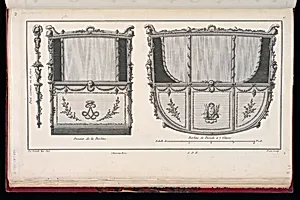
Berline de Parade à 7 Glaces
Classification
Department
Smithsonian Collection
Museum
Smithsonian American Art Museum
Credit
Purchased for the Museum by the Advisory Council
Accession Number
1921-6-331-57
Rights
Public Domain
About this artwork
Research in Progress
Art Historical Context
Step into the opulent world of 18th-century French aristocracy with *Berline de Parade à 7 Glaces*, a captivating print by Richard de Lalonde, a French artist active from 1780 to 1796. Created between 1775 and 1788, this work depicts a grand parade berline—a luxurious horse-drawn coach adorned with seven glass panels, symbolizing the extravagance of the elite. As a print in the Smithsonian American Art Museum's collection, purchased by the Advisory Council, it showcases Lalonde's expertise in equestrian and carriage designs, blending technical precision with neoclassical elegance. Lalonde was renowned for his detailed engravings of carriages, which served as both artistic renderings and practical blueprints for coachmakers during the Ancien Régime. This piece captures the height of pre-Revolutionary splendor, when such vehicles were status symbols paraded through Versailles or Paris streets, their multifaceted glass allowing glimpses of noble passengers while dazzling onlookers. Though the exact medium remains under research, prints like this democratized high fashion, influencing European and even American carriage styles. Today, housed in the Smithsonian Collection, *Berline de Parade à 7 Glaces* invites us to ponder the artistry of mobility in a gilded age—where every curve and pane reflected the era's social hierarchies and craftsmanship. A true window into history!