
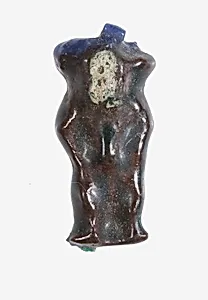
Bes Amulet
Unknown Artist
ca. 1390–1352 B.C.
Medium
Faience, deep brown
Dimensions
H. 1.7 cm (11/16 in)
Classification
Amulet, Bes
Period
New Kingdom
Department
Egyptian Art
Museum
Metropolitan Museum of Art, New York, NY
Credit
Rogers Fund, 1911
Accession Number
11.215.173
Rights
Public Domain
Tags
Art Historical Context
Nestled in the Metropolitan Museum of Art's Egyptian collection, this tiny Bes Amulet (ca. 1390–1352 B.C.) from Dynasty 18 of the New Kingdom exemplifies the intimate protective magic of ancient Egypt. just 1.7 cm tall, it depicts Bes, a popular dwarf-like deity with a fierce, leonine, often shown grinning or sticking out his tongue to scare away evil spirits. During the New Kingdom—a golden age of imperial power under pharaohs like Amenhotep III—such amulets were everyday talismans, worn or carried by women and children for safeguarding during childbirth, sleep, and daily perils. Crafted from deep brown faience, a glazed ceramic prized for its vibrant durability and affordability, the amulet showcases Egyptian mastery of low-fired silica materials. Faience mimicked precious stones like lapis lazuli, making divine protection accessible to all social classes. Bes's squat, muscular form embodied household guardianship, blending humor with menace in a style that humanized the divine. Acquired through the Rogers Fund in 1911, this artifact invites us to imagine ancient Egyptians clutching it for comfort, a poignant reminder of timeless human fears and faiths.