
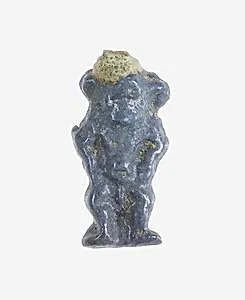
Bes Amulet
Unknown Artist
ca. 1390–1352 B.C.
Medium
Faience
Dimensions
H. 1.6 cm (5/8 in)
Classification
Amulet, Bes
Period
New Kingdom
Department
Egyptian Art
Museum
Metropolitan Museum of Art, New York, NY
Credit
Rogers Fund, 1911
Accession Number
11.215.174
Rights
Public Domain
Tags
Art Historical Context
This charming Bes amulet, crafted from faience around 1390–1352 B.C. during Egypt’s New Kingdom, Dynasty 18, offers a glimpse into the protective magic that shaped daily life in ancient Egypt. Standing just 1.6 centimeters tall, the tiny figure represents Bes, the lion-maned dwarf deity revered as a guardian of households, mothers, and children. Worn close to the body, such amulets were believed to ward off evil spirits and bring good fortune. Faience, a vibrant glazed ceramic material prized for its luminous blue-green hues reminiscent of turquoise, was especially favored for amulets because of its durability and symbolic connection to rebirth and vitality. Artisans molded the compact form with careful detail despite its miniature scale, ensuring Bes’s fierce yet benevolent expression remained clear. Acquired by the Metropolitan Museum of Art through the Rogers Fund in 1911, this delicate piece continues to speak to the intimate ways Egyptians blended art, faith, and protection in their personal adornments.