
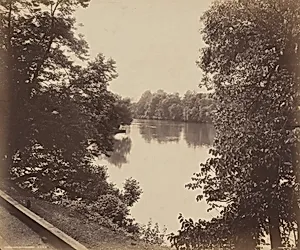
Bethlehem, Calypso Island
c. 1895
Medium
albumen print
Dimensions
image: 43.5 × 52 cm (17 1/8 × 20 1/2 in.) mount: 49.7 × 60.5 cm (19 9/16 × 23 13/16 in.)
Classification
Photograph
Department
CPH
Museum
National Gallery of Art, Washington, D.C.
Credit
Pepita Milmore Memorial Fund
Accession Number
2014.29.1.38
Rights
Public Domain
Art Historical Context
Step into the luminous world of 19th-century photography withBethlehem, Calypso*, an albumen print by American photographer William H. Rau, created 1895. This image measures 43.5 × 52 cm on its mount, capturing the era's fascination with grand-scale views. Albumen prints, made by coating paper with egg whites sensitized with silver salts, were celebrated for their rich tonal range, sharp detail, and warm highlights—qualities that made them the dominant medium for fine art photography from the 1850s to the 1890s. Rau's mastery of this technique showcases the technical prowess required to produce such vivid, large-format works. The evocative title blends industrial grit with mythical allure, likely referencing Bethlehem, Pennsylvania—a hub of steel production during America's Gilded Age—with "Calypso Island" evoking the enchanting isle from Homer's *Odyssey*. Rau, known for his panoramic landscapes and commissions from railroads like the Pennsylvania Railroad, documented the nation's rapid industrialization and natural beauty. Acquired through the Pepita Milmore Memorial Fund for the National Gallery of Art's photography collection, this piece highlights photography's role in preserving fleeting moments of progress and poetry amid the late Victorian era. A testament to Rau's eye for dramatic composition, it invites visitors to ponder the harmony between human ambition and imaginative naming.
About the Artist
William H. Rau · 1855–1920
William Herman Rau (1855–1920) was an American photographer renowned for his luminous large-format landscape photographs of Pennsylvania and the American railroad. Born in Philadelphia, he learned photography as a teenager and by twenty had already participated in a U.S. government expedition to observe the transit of Venus in Tasmania. He later accompanied expeditions to photograph in Siberia and...