
Bezoekers van het drakenpaleis
1802
Medium
color woodcut
Dimensions
265; 182
Rights
Public Domain
About this artwork
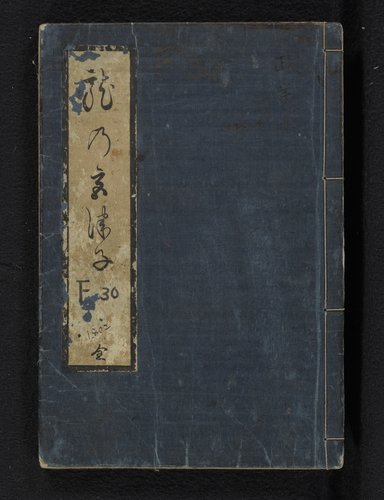
Boek (eerste editie) met afbeeldingen van vissen, schildpadden en schelpen; donkerblauwe kaft; linksboven titelstrook; 33 bladen, genummerd: drie pagina`s, voorwoord; 1b-31a, afbeeldingen van zeedieren; 31b-32, gedichten; 32b, colofon. Boek bewaard in donkerrode omslag.
Art Historical Context
**Bezoekers van het Drakenpaleis (Visitors to the Dragon Palace)** Created in 1802 by Kitao Masayoshi, a Japanese ukiyo-e artist of the Edo period, this first-edition color woodcut book (ehon) measures 265 × 182 mm and invites viewers into a fantastical underwater world. Housed in a dark blue with a title strip and in a dark red wrapper it spans 33 leaves: a preface on the first three pages, followed by intricate illustrations of fish, turtles, and shells from pages 1b to 31a. The final leaves feature poems (31b-32) and a colophon on 32b, blending art, nature, and poetry. The title evokes the mythical Dragon Palace from Japanese folklore—a lavish underwater realm ruled by the Dragon King—transforming scientific observation of marine life into poetic wonder. Masayoshi, known for his detailed depictions of flora and fauna, captures the era's fascination with natural history amid Japan's isolationist sakoku policy, when such books educated and delighted scholars and collectors. Masterfully printed using multi-block color woodcut techniques, the vibrant hues and precise lines showcase ukiyo-e's precision, making exotic sea creatures accessible. This rare volume highlights Edo Japan's cultural fusion of empirical study and imaginative storytelling, offering visitors a window into 19th-century artistic ingenuity.
About the Artist
Kitao Masayoshi · 1761–1824
Kitao Masayoshi (1761–1824), who later took the name Kuwagata Keisai, was a pivotal figure in Japanese art whose influence extended from ukiyo-e printmaking to the development of instructional art manuals that would shape Japanese visual culture for generations. Born in Edo (present-day Tokyo) in 1761 and dying there in 1824, Masayoshi's career spanned a transformative period in Japanese art when ...