Ctrl K
1761–1824
Occupations
Kitao Masayoshi (1761–1824), who later took the name Kuwagata Keisai, was a pivotal figure in Japanese art whose influence extended from ukiyo-e printmaking to the development of instructional art manuals that would shape Japanese visual culture for generations. Born in Edo (present-day Tokyo) in 1761 and dying there in 1824, Masayoshi's career spanned a transformative period in Japanese art when indigenous traditions were beginning to encounter and absorb Western techniques of perspective and representation. His innovative approach to teaching art through simplified drawing methods profoundly influenced subsequent generations of Japanese artists, most notably the great Katsushika Hokusai, whose famous Manga series drew direct inspiration from Masayoshi's groundbreaking instructional publications. Masayoshi's artistic formation began under Kitao Shigemasa (1739–1820), one of Edo's most respected ukiyo-e masters, specializing in beauty prints (bijin-ga) and book illustrations. From this traditional ukiyo-e foundation, Masayoshi initially produced actor prints and novelette illustrations in the popular ukiyo-e style. However, in the 1790s, following his study with Kano Eisen'in in the orthodox Kano school tradition, Masayoshi's career took a decisive turn when he became official painter to the daimyo of Tsuyama in 1794, adopting the name Kuwagata Keisai and shifting his focus from commercial ukiyo-e production to painting and the creation of instructional drawing manuals. His most significant contribution to Japanese art came through his revolutionary "abbreviated style" (ryakuga-shiki) instructional manuals. His "Abbreviated Picture Style" (Ryakugashiki, 1795) and "Simplified Forms of Drawing Birds and Flowers" (Choju ryakugashiki, 1797) democratized artistic knowledge by breaking down complex subjects—people, flora, trees, birds, famous places, fish, and insects—into simplified forms that students could master. These books achieved enormous popular success, being reprinted numerous times and spreading the concept of ryaku-ga (abbreviated pictures) throughout Japan. Masayoshi's "Methods of Cursive Drawing of Landscapes" (1800) introduced innovative bird's-eye view techniques and Western perspective principles, directly influencing Hokusai's approach to his own instructional works and establishing Masayoshi as a crucial bridge between traditional Japanese art and the increasingly international visual culture of the 19th century.
Kitao Masayoshi was born in 1761 in Edo, the bustling capital of Tokugawa Japan. Edo in the mid-18th century was the world's largest city, with a population exceeding one million, and its vibrant urban culture supported a thriving commercial art market centered on ukiyo-e ("pictures of the floating world")—woodblock prints depicting actors, courtesans, landscapes, and everyday life.
Masayoshi's artistic training began under the tutelage of Kitao Shigemasa (1739–1820), one of Edo's most accomplished ukiyo-e masters. Shigemasa was particularly renowned for his bijin-ga (beautiful women prints) and his sophisticated book illustrations. Under Shigemasa's guidance, Masayoshi learned the fundamental techniques of ukiyo-e: the collaborative process involving artists, woodblock carvers, and printers; the conventions of depicting the human figure; and the commercial requirements of the print market.
As a student in Shigemasa's studio, Masayoshi adopted the "Kitao" studio name, following the common practice where students took their master's surname as a sign of lineage and training. This connection to the respected Kitao studio provided crucial professional credentials in Edo's competitive art market.
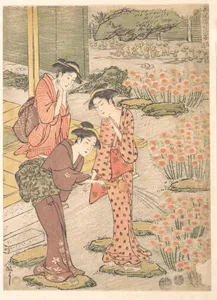
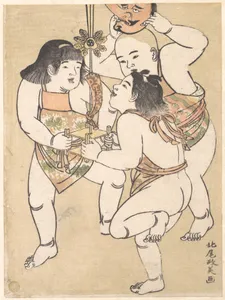
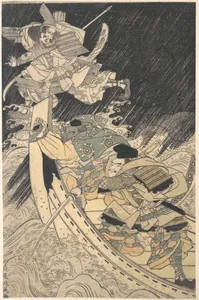
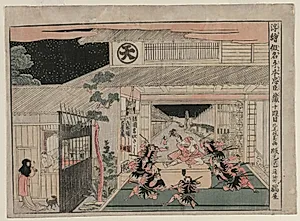
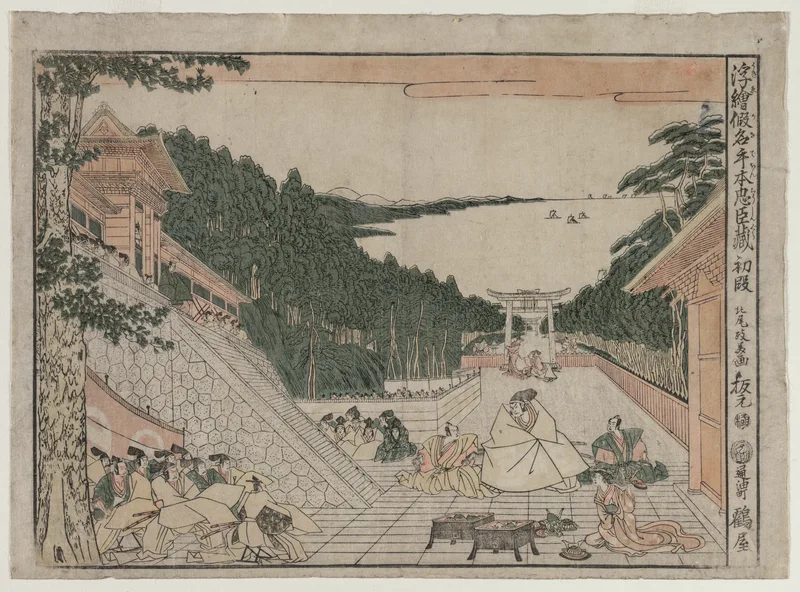
During his years as an ukiyo-e artist working under the name Kitao Masayoshi, he produced mainly novelette illustrations (kibyoshi) and actor prints. These commercial works demonstrated competent handling of ukiyo-e conventions but gave little indication of his future innovations in artistic pedagogy and technique.
In the early 1790s, Masayoshi undertook study with Kano Eisen'in, entering the orthodox Kano school tradition. This marked a significant shift in his artistic trajectory. The Kano school, founded in the 15th century, represented the official painting tradition of the Tokugawa shogunate and emphasized Chinese-inspired ink painting, careful study of classical models, and hierarchical transmission of knowledge.
This dual training in both the popular ukiyo-e tradition and the elite Kano school gave Masayoshi a uniquely comprehensive understanding of Japanese art. While ukiyo-e emphasized commercial appeal, bold compositions, and contemporary subject matter, the Kano tradition stressed refined brushwork, classical themes, and scholarly discipline.
The combination of these two traditions—popular and elite, commercial and classical—positioned Masayoshi to envision new possibilities for artistic instruction that could bridge these traditionally separate spheres. His later instructional manuals would synthesize elements from both traditions, making sophisticated artistic techniques accessible to broader audiences.
In 1794, a crucial turning point arrived when Masayoshi became official painter in attendance to the daimyo of Tsuyama, a feudal domain in what is now Okayama Prefecture. This appointment represented a significant elevation in status, from commercial printmaker serving urban popular markets to court painter serving a feudal lord.
Upon receiving this appointment, Masayoshi adopted a new artistic name: Kuwagata Keisai. This name change marked his transition from ukiyo-e artist to orthodox Kano-style painter. In Japanese artistic practice, such name changes signified important career transitions and shifts in artistic identity.
The court appointment brought financial security and prestigious status, but it also meant abandoning the commercial ukiyo-e market where he had built his early reputation. From this point forward, Keisai's work would focus primarily on painting and on the instructional drawing manuals that would become his most significant legacy.
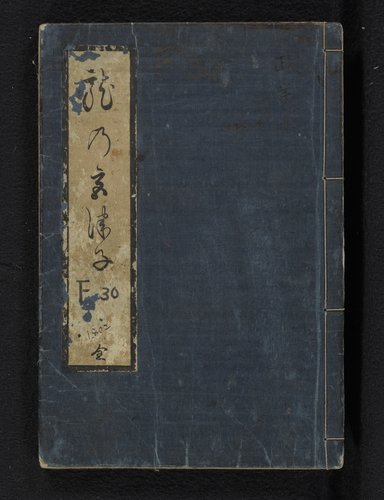
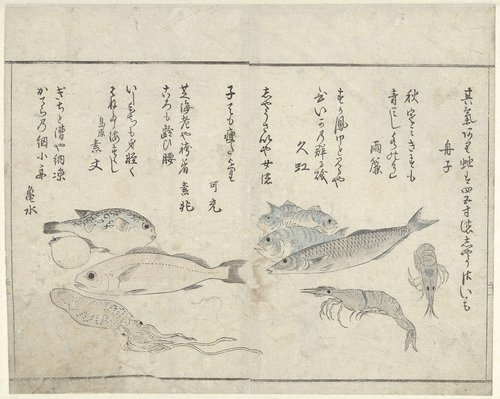
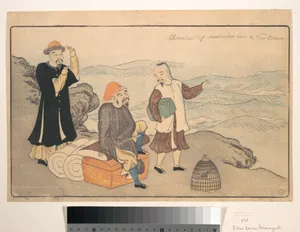
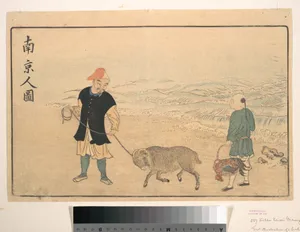
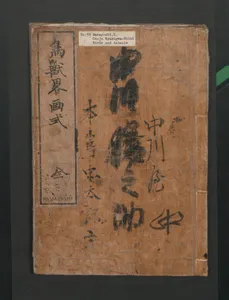
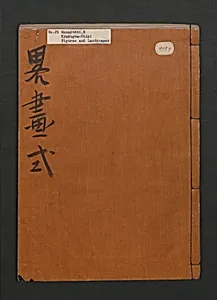
The year 1795 saw the publication of Keisai's groundbreaking "Abbreviated Picture Style" (Ryakugashiki), which revolutionized artistic instruction in Japan. This comprehensive manual demonstrated how to draw various subjects—people, flora, trees, birds, famous places, fish, and insects—using simplified, systematic methods.
The concept of ryaku-ga (abbreviated pictures) that Keisai pioneered involved breaking down complex visual subjects into basic geometric forms and simplified contours that students could easily learn and reproduce. This approach democratized artistic knowledge, making techniques that had previously required years of apprenticeship accessible to anyone with dedication to study.
The book achieved extraordinary popular success, being reprinted numerous times throughout the late Edo period. The term "ryaku-ga" spread throughout Japan, entering common artistic vocabulary. Keisai's approach influenced art education at all levels, from amateur enthusiasts to professional artists seeking to expand their repertoire.
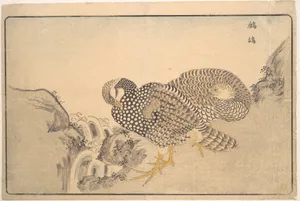
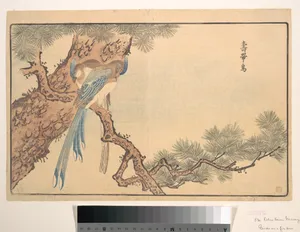
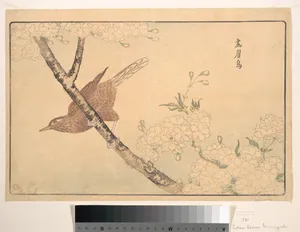
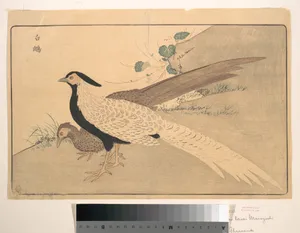
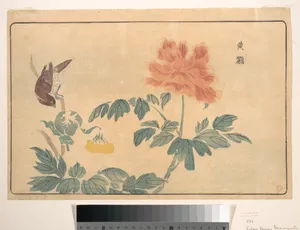
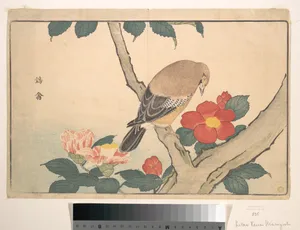
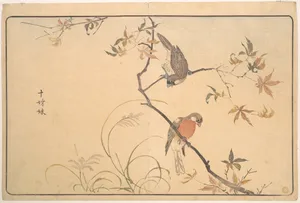
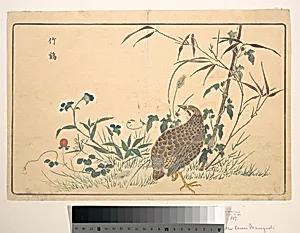
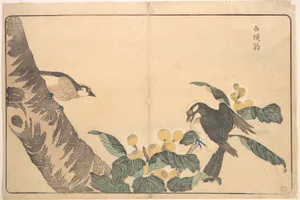
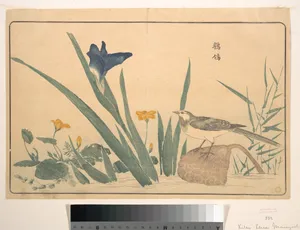
In 1797, Keisai published "Simplified Forms of Drawing Birds and Flowers" (Choju ryakugashiki), applying his abbreviated style specifically to kachō-ga (bird-and-flower painting), a traditional genre highly valued in Japanese art. This manual provided systematic methods for depicting various species with naturalistic accuracy while maintaining aesthetic appeal.
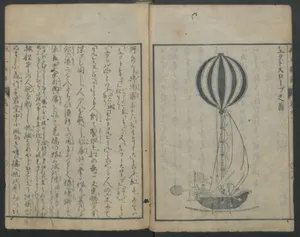
Perhaps his most influential work appeared in 1800: "Methods of Cursive Drawing of Landscapes." This manual introduced several innovations that would prove crucial for the development of Japanese landscape art. Keisai demonstrated bird's-eye view perspectives, Western-influenced spatial recession, and systematic approaches to depicting topographical features.
Most significantly, "Methods of Cursive Drawing of Landscapes" directly influenced Katsushika Hokusai (1760–1849), whose monumental "Hokusai Manga" (begun 1814) drew inspiration from Keisai's systematic approach to categorizing and depicting natural and human subjects. Hokusai's own instructional works acknowledged this debt, and art historians recognize Keisai as a crucial precursor to Hokusai's innovations.
Keisai's manuals represented a distinctive contribution to the genre of giga (playful pictures) and instructional art books. His work combined artistic sophistication with pedagogical clarity, making them valuable both as teaching tools and as aesthetic objects in their own right.
In his final decades, Keisai continued producing paintings in the Kano style while maintaining his role as court painter. His paintings demonstrated mastery of traditional ink techniques combined with the observational precision he had developed through his instructional work.
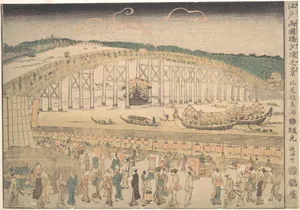
His landscape paintings employed uki-e style, incorporating Western perspective techniques that created convincing spatial depth. This synthesis of Japanese aesthetic principles with Western spatial systems exemplified the cultural exchange beginning to reshape Japanese art in the late Edo period.
Keisai's reputation as an innovative artist-teacher continued to grow even in his later years. His instructional manuals remained in print and in active use, influencing not only Hokusai but numerous other artists seeking systematic approaches to mastering various subjects.
Kitao Masayoshi, known as Kuwagata Keisai, died in 1824 in Edo. His death came at a pivotal moment in Japanese history, just two decades before Commodore Perry's arrival would force Japan's opening to the West and accelerate the cultural transformations that Keisai had anticipated through his integration of Western perspective techniques.
His legacy rests primarily in his revolutionary approach to art instruction. By systematizing artistic knowledge and making it accessible through printed manuals, Keisai democratized art education and provided tools that allowed Japanese artists to master complex subjects more rapidly than traditional apprenticeship systems had permitted. His influence on Hokusai alone would justify his historical importance, but his broader impact on Japanese art pedagogy and the spread of abbreviated drawing methods throughout the culture represents an achievement of even greater significance.
Artheon Research Team
Last updated: 2025-11-09
Biography length: ~1,780 words
Wikidata/Wikimedia Commons