
Bird on Tree (Haha-chō)
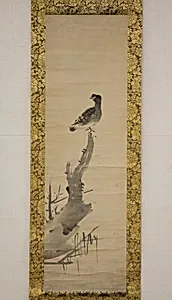
Medium
Hanging scroll; ink on paper
Dimensions
Image: 40 1/2 × 12 1/16 in. (102.9 × 30.6 cm) Overall with mounting: 71 1/8 × 16 7/16 in. (180.7 × 41.7 cm) Overall with knobs: 71 1/8 × 18 1/16 in. (180.7 × 45.9 cm)
Classification
Paintings
Culture & Period
Japan · Muromachi period (1392–1573)
Department
Asian Art
Museum
Metropolitan Museum of Art, New York, NY
Credit
The Howard Mansfield Collection, Purchase, Rogers Fund, 1936
Accession Number
36.100.65
Rights
Public Domain
Tags
Art Historical Context
**Bird on Tree (H-chō)** Artist: Shūkō ( Muromachi period) *Hanging scroll; ink on paper, Muromachi period (139–1573), Japan* Nestled within the elegant tradition of Japanese ink painting, *Bird on Tree (Haha-chō)* by Shūkō captures the essence of nature through minimalist brushwork. Created during the Muromachi period—a golden age of Zen-influenced art under the Ashikaga shogunate—this hanging scroll exemplifies *suiboku-ga* (ink monochrome painting). The medium of ink on paper allowed artists like Shūkō to evoke vast emotional depth with sparse, fluid strokes, prioritizing suggestion over realism. A lone bird perches on a branch, embodying the period's aesthetic of wabi-sabi: beauty in imperfection and transience. Hanging scrolls like this were cherished in Zen monasteries and elite homes, unrolled for contemplation during tea ceremonies or meditation. The bird-and-branch motif, a staple of East Asian painting, symbolizes harmony with nature and the fleeting moment, drawing from Chinese literati traditions adapted in Japan. Measuring over 71 inches when fully mounted, its vertical format invites viewers to immerse themselves upward, mirroring a meditative gaze. Acquired through The Howard Mansfield Collection in 1936, this work now graces the Metropolitan Museum of Art's Asian Art department, offering a window into Muromachi Japan's refined cultural sophistication. Pause before it, and feel the quiet poetry of a single bird against the void.