
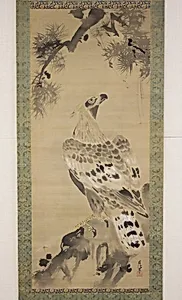
Eagle
17th–18th century
Medium
Hanging scroll; ink and color on silk
Dimensions
Image: 50 1/4 × 21 1/4 in. (127.6 × 54 cm) Overall with mounting: 85 × 26 1/4 in. (215.9 × 66.7 cm) Overall with knobs: 85 × 28 1/2 in. (215.9 × 72.4 cm)
Classification
Paintings
Culture & Period
Japan · Edo period (1615–1868)
Department
Asian Art
Museum
Metropolitan Museum of Art, New York, NY
Credit
The Howard Mansfield Collection, Purchase, Rogers Fund, 1936
Accession Number
36.100.7
Rights
Public Domain
Tags
Art Historical Context
Behold the commanding presence of *Eagle*, a hanging scroll by Kano Chikanobu, crafted during Japan's Edo period (1615–1868), in the 17th or 18th century. ink and color on silk painting captures a majestic bird in vivid detail, measuring 50¼ × 21¼ inches (127.6 × 54 cm) within its mounting. Hanging scrolls like this were prized artifacts in elite Japanese households and temples, unrolled for seasonal display or ceremonial viewing, transforming walls into windows of nature's grandeur. Chikanobu belonged to the Kano school, Japan's preeminent professional painting lineage since the 15th century, renowned for its bold brushwork, decorative flair, and mastery of ink washes blended with mineral colors. During the peaceful Edo era under Tokugawa rule, such works flourished, blending Chinese influences with native sensibilities to adorn samurai residences and Zen spaces. The eagle, a recurring motif in East Asian art, evokes power and vigilance, rendered here with dynamic feathers and piercing gaze that draw viewers into its watchful world. Now part of the Metropolitan Museum of Art's Asian Art collection (acquired via The Howard Mansfield Collection, Rogers Fund, 1936), *Eagle* exemplifies the scroll's role as both aesthetic pinnacle and cultural emblem, inviting contemplation of harmony between humanity and the wild.
About the Artist
Kano Chikanobu (Japanese) · 1660 –1728
Japanese, 1660–1728