
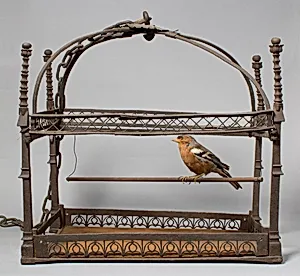
Birdcage
Unknown Artist
15th or 16th century
Medium
Wrought iron
Dimensions
L. 14- 7/8, W. 10-1/8, greatest H. 14-3/4 in.
Classification
Metalwork-Iron
Culture
South French
Department
The Cloisters
Museum
Metropolitan Museum of Art, New York, NY
Credit
The Cloisters Collection, 1952
Accession Number
52.121.1
Rights
Public Domain
Tags
Art Historical Context
Nestled in The Cloisters' collection at the Metropolitan Museum of Art this exquisite wrought iron birdcage hails from South France in the 15th or 16th century. Measuring 15 inches long,10 inches wide, and 15 inches high at its tallest, it's a compact yet captivating example of medieval metalwork designed to house pet birds—a luxury item for affluent households of the time. The unknown artisan crafted it from wrought iron, a labor-intensive medium involving heating and hand-hammering malleable iron bars into precise, functional forms. Wrought iron's durability and workability made it ideal for everyday objects like cages, gates, and tools across Renaissance Europe, blending utility with subtle artistry. In South French culture, such pieces often reflected regional craftsmanship traditions, where blacksmiths infused strength with elegant proportions. Birdcages symbolized refined tastes, as keeping songbirds was a fashionable pastime among the nobility, evoking themes of captivity and nature's beauty. This artifact, acquired in 1952 as part of The Cloisters Collection, offers a tangible glimpse into daily life during the late Middle Ages, highlighting the skilled hands behind anonymous functional art. Visitors can appreciate how even humble ironwork carried cultural weight in a world transitioning from Gothic to Renaissance sensibilities.