
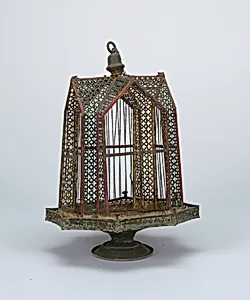
Birdcage
1850–99
Classification
containers
Department
Smithsonian Collection
Museum
Smithsonian American Art Museum
Credit
Gift of Eleanor and Sarah Hewitt
Accession Number
1916-19-49-a,b
Rights
Public Domain
About this artwork
Research in Progress
Art Historical Context
Nestled in the Smithsonian American Art Museum's collection *Birdcage* (1850–99) is a captivating example 19th-century American decorative arts, classified simply as a "container." Crafted by an unknown artist a time of rapid industrialization and growing middle-class leisure, this object reflects the era's fascination with domesticated nature. Birdcages like this one brought the outdoors indoors, serving both practical and ornamental purposes in Victorian households, where keeping songbirds symbolized refinement and sentimentality. Though the medium remains unidentified amid ongoing research, such artifacts were often wrought from wire, wood, or metal, blending functionality with intricate design. Donated as a gift from collectors Eleanor and Sarah Hewitt—pioneering sisters who shaped the Smithsonian's design holdings—this piece highlights the Hewitt sisters' eye for everyday objects with artistic merit. It invites us to ponder how ordinary items from the past reveal cultural values, like the human desire to cage beauty. As research progresses, *Birdcage* continues to intrigue, offering a window into America's Gilded Age domestic life and the subtle artistry of utilitarian forms. (178 words)
About the Artist
Unknown
The artist designated as "Unknown" in our virtual museum's collection exemplifies a poignant chapter in art history: creators whose identities have faded into obscurity despite the enduring power of their work. With only one known artwork attributed to them in our holdings, this figure represents countless anonymous hands that shaped visual culture across centuries. Museums worldwide, including th...