
Black
19th century
Medium
Part of an album of woodblock prints (surimono); ink and color on paper
Dimensions
8 x 7 1/8 in. (20.3 x 18.1 cm)
Classification
Prints
Culture & Period
Japan · Edo period (1615–1868)
Department
Asian Art
Museum
Metropolitan Museum of Art, New York, NY
Credit
H. O. Havemeyer Collection, Bequest of Mrs. H. O. Havemeyer, 1929
Accession Number
JP2378
Rights
Public Domain
Tags
Art Historical Context
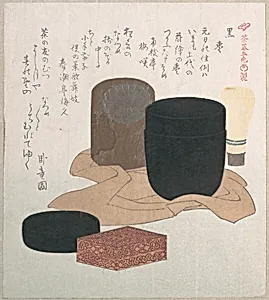
Kubo Shunman's *Black*, a delicate 19th-century woodblock print from the Edo period (1615–8), captures the refined elegance of Japanese tea culture. Part of a surimono album—privately commissioned prints often exchanged among poetry enthusiasts—this intimate work (8 x 7 1/8 in.) depicts aquered tea caddy, *natsume*, its glossy black surface gleaming under subtle ink and color washes on paper. Surimono like this were artisanal treasures, featuring embossing, mica dusting, and precise carving for a tactile, luxurious effect, far beyond standard ukiyo-e. As a master of the genre, Shunman blended ukiyo-e's floating world aesthetics with poetic subtlety, elevating everyday utensils into symbols of *wabi-sabi*—the beauty in imperfection cherished in the tea ceremony (*chanoyu*). Tea caddies held precious matcha powder, embodying humility and mindfulness in rituals that fostered social harmony among samurai, merchants, and artists during Edo Japan's prosperous urban life. Housed in the Metropolitan Museum of Art's H. O. Havemeyer Collection, *Black* invites visitors to ponder the sensory world of tea masters, where a simple object's sheen evokes seasonal transience and quiet contemplation.
About the Artist
Kubo Shunman · 1757–1820
Japanese, 1757–1820