
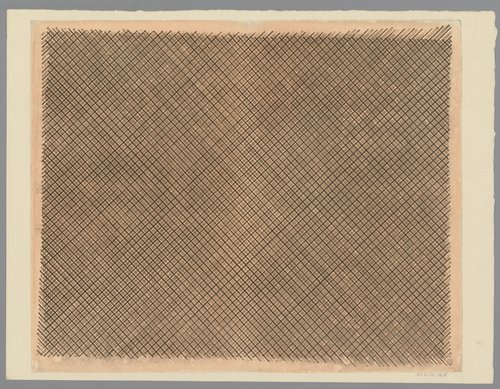
Blad met ruitpatroon
1800 - 1900
Medium
block printing (relief printing process)
Dimensions
432; 355
Rights
Public Domain
About this artwork
Schenking van de heer F.G. Waller, Amsterdam
Art Historical Context
**Blad met ruitpatroon (Sheet with Diamond Pattern)***Anonymous, 1800–1900* *Block printing (ief printing process), 355 × 432 mm* *Gift of F.G. Waller, AmsterdamStep into the world of 19th-century Dutch with *Blad metuitpatroon*, an anonymous block-printed sheet featuring a striking diamond pattern. Created between 1800 and 1900, this artwork exemplifies the humble yet elegant relief printing technique, where intricate designs were carved into wooden blocks, inked, and pressed onto paper or fabric. Measuring a generous 355 by 432 mm, its repeating rhombus motif evokes the geometric precision of traditional textiles and wallpapers, blending utility with subtle artistry. Block printing, a labor-intensive process predating modern mechanized methods, was widely used in Europe for decorative papers, book covers, and household linens during the Industrial Revolution. In the Netherlands, such patterns reflected everyday aesthetics influenced by folk traditions and emerging design trends, offering affordable beauty to middle-class homes. This piece's anonymity highlights the work of skilled, unnamed artisans whose techniques preserved cultural motifs across generations. Generously donated by Amsterdam collector F.G. Waller, *Blad met ruitpatroon* invites us to appreciate the unsung heroes of printmaking. Its timeless pattern reminds visitors how simple forms can captivate, bridging 19th-century workshops with today's admiration for vernacular art.
About the Artist
anonymous
In the vast tapestry of art history, "Anonymous" stands not as a singular individual but as a collective designation for countless unidentified creators whose works have endured across millennia. These artists, spanning prehistoric cave painters to medieval illuminators and folk craftsmen, produced the foundational layers of human visual culture. Prior to the Renaissance, when individual fame emer...