
Bloodroot (Sanguinaria canadensis)
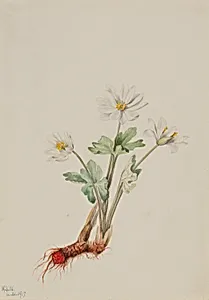
Medium
Painting
Classification
Painting
Department
Smithsonian Collection
Museum
Smithsonian American Art Museum
Credit
Smithsonian American Art Museum, Gift of the artist
Accession Number
1970.355.461
Rights
Public Domain
Tags
Art Historical Context
Mary Vaux Walcott'sBloodroot (Sanguaria canadensis)*, in 1917, the delicate beauty of this native North American wildflower, known for its white petals and red root sap that inspired its name. As part of the Smithsonian American Art Museum's collection—gifted directly by the artist—this painting exemplifies early 20th-century botanical, blending scientific precision with artistic elegance. Bloodroot, or *Sanguinaria canad*, blooms briefly in spring woodlands, and Walcott's work preserves its ephemeral charm for museum visitors. Walcott, a pioneering artist and naturalist, created this piece during a prolific period when she documented North American flora through meticulous paintings. Housed in the Smithsonian Collection, the artwork highlights the era's growing appreciation for native plants amid expanding scientific exploration and conservation efforts. Its classification as a painting underscores the medium's role in bridging art and botany, offering viewers a window into the natural world with vivid detail and sensitivity. Today, this gifted treasure invites us to marvel at nature's intricacies, reminding us of the enduring value of observing and honoring the wildflowers that dot our landscapes.