
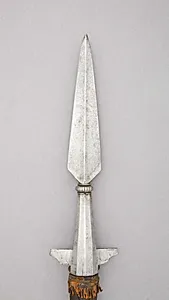
Boar Spear
Unknown Artist
17th century
Medium
Steel, wood, leather
Dimensions
L. 85 1/2 in. (217.2); L. of head 17 3/8 in. (44.1 cm); W. 5 in. (12.7 cm); Wt. 5 lbs. 7 oz. (2466.4 g)
Classification
Shafted Weapons
Culture
possibly French
Department
Arms and Armor
Museum
Metropolitan Museum of Art, New York, NY
Credit
Frederick C. Hewitt Fund, 1912
Accession Number
12.141.11
Rights
Public Domain
Art Historical Context
Step into the thrilling world of 17th-century hunting with this impressive *Boar Spear*, a masterful example of functional arms and armor from the Metropolitan Museum of Art. Crafted from steel, wood, and leather, it measures an imposing 85½ inches in length, with a hefty steel head spanning 17⅜ inches and weighing over 5 pounds. Attributed to an unknown artist and possibly of French origin, this shafted weapon exemplifies the blend of utility and craftsmanship prized by European nobility. Boar spears like this one were essential tools for hunting dangerous wild boars, whose ferocity demanded specialized designs. The broad, leaf-shaped steel head, often featuring reinforced crossbars (inferred from the form), pierced the animal while preventing it from charging closer—a clever engineering feat reflecting the era's hunting traditions among aristocrats. In the 1600s, such weapons symbolized status and skill, bridging warfare and sport in a time of elaborate courts and expansive forests. Acquired through the Frederick C. Hewitt Fund in 1912, this spear highlights the Met's renowned Arms and Armor collection, showcasing how everyday objects of peril became enduring works of art through precise metallurgy and joinery. A testament to forgotten hands, it invites us to ponder the bold hunters who wielded it.