
Spontoon
Unknown Artist
18th century
Medium
Steel, wood
Dimensions
L. 77 7/8 in. (197.8 cm); L. of head 16 1/2 in. (41.9 cm); W. 4 5/8 in. (11.8 cm); Wt. 1 lb. 13 oz. (822 g)
Classification
Shafted Weapons
Culture
American
Department
Arms and Armor
Museum
Metropolitan Museum of Art, New York, NY
Credit
Rogers Fund, 1942
Accession Number
42.140
Rights
Public Domain
Art Historical Context
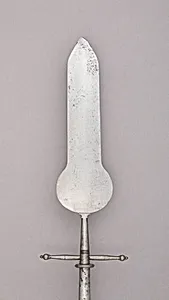
Behold the **Spontoon**, a 18th-century shaft weapon from American culture, now housed in the Metropolitan Museum Art's Arms and Armor (Rogers Fund, 1942). Crafted from steel and wood, this piece measures an impressive 77 7/8 inches (197.8 cm) in length, with a 16 1/2-inch (41.9 cm) head, 4 5/8 inches (11.8 cm) wide, weighing just 1 lb. 13 oz. (822 g). Its balanced design—featuring a pointed steel blade atop a sturdy wooden shaft—exemplifies utilitarian craftsmanship tailored for combat. In the turbulent 18th century, spontoons served as symbols of authority for military officers, particularly in colonial American and European infantry units. Lighter and more maneuverable than full pikes, they were ideal for close-quarters command during drills, charges, or signaling on the battlefield. This American example highlights the era's transatlantic influences, blending European military traditions with local adaptations amid conflicts like the Revolutionary War. Though by an unknown maker, the spontoon's precise engineering reveals skilled metalworking and woodworking techniques, underscoring its dual role as functional tool and status emblem. A testament to early American martial heritage, it invites us to ponder the human stories behind these elegant instruments of war.