
Bobbin
Unknown Artist
9th–10th century
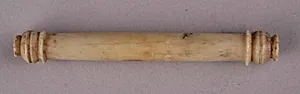
Medium
Bone; carved and incised
Dimensions
H. 2 1/16 in. (5.3 cm) Diam. 1/4 in. (0.6 cm)
Classification
Ivories and Bone
Department
Islamic Art
Museum
Metropolitan Museum of Art, New York, NY
Credit
Rogers Fund, 1940
Accession Number
40.170.143
Rights
Public Domain
Tags
Art Historical Context
This delicate bone bobbin, carved and incised with fine detail, dates to the 9th–10th century and offers a glimpse into the everyday artistry of the medieval Islamic world. Standing just over two inches tall, the small cylindrical tool was likely used in textile production, such as weaving or thread winding. Its classification among ivories and bone objects highlights how even utilitarian items received careful attention, transforming functional tools into objects of subtle beauty. In Islamic art of this period, bone carving flourished alongside more luxurious materials like ivory, allowing artisans to create accessible yet refined works for daily life. The incised patterns would have required steady hands and specialized tools, demonstrating the high level of skill applied to modest media. Acquired by the Metropolitan Museum through the Rogers Fund in 1940, this bobbin now serves as a reminder of the rich material culture that supported thriving textile traditions across the Islamic lands. Visitors can appreciate how such pieces bridge the gap between craft and art, revealing the creativity embedded in ordinary objects from centuries past.