
Bodhisattva
1200 - 1400
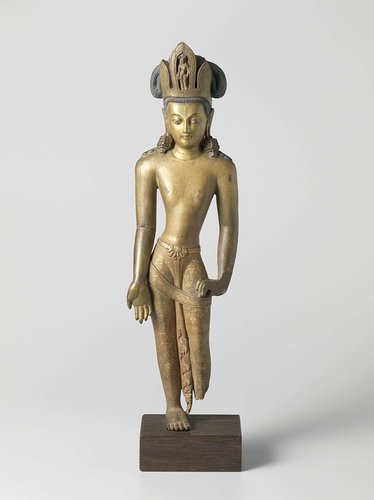
Medium
wood (plant material)
Dimensions
41.5; 10.5; 7
Rights
Public Domain
About this artwork
hoogte 41,5 cm x breedte 10,5 cm x diepte 7 cm
Art Historical Context
This exquisite wooden sculpture of a *Bodhisattva*, dating from 1200–1400, embodies the compassionate ideals of Mahayana Buddhism. Created by an anonymous artist during a flourishing era of Buddhist art across Asia—spanning regions like China, Japan, Southeast Asia—the figure represents an enlightened being who postpones full Buddhahood to aid suffering humanity. Standing just 41.5 cm tall, with a slender 10.5 cm width and 7 cm depth, its intimate scale suggests it was crafted for personal devotion, perhaps adorning a household altar or portable shrine. Carved from wood—a plant-derived medium prized for its workability and natural warmth—the sculpture highlights masterful techniques of the period. Artisans likely used chisels and abrasives to achieve smooth surfaces and flowing drapery, capturing the Bodhisattva's serene poise and gentle expression. Wood's prevalence in such works allowed for portability and resistance to humid climates, making these sculptures vital conduits for spiritual practice among laypeople and monks alike. As a testament to medieval Asian craftsmanship, this *Bodhisattva* invites reflection on themes of empathy and enlightenment, bridging the divine and everyday life. Its survival over centuries underscores the enduring cultural reverence for Buddhist iconography.
About the Artist
anonymous
In the vast tapestry of art history, "Anonymous" stands not as a singular individual but as a collective designation for countless unidentified creators whose works have endured across millennia. These artists, spanning prehistoric cave painters to medieval illuminators and folk craftsmen, produced the foundational layers of human visual culture. Prior to the Renaissance, when individual fame emer...