
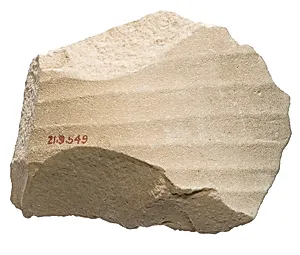
Body with garment, pleating
Unknown Artist
ca. 1353–1336 B.C.
Medium
Limestone
Dimensions
H. 12 × W. 9 × D. 5.5 cm (4 3/4 × 3 9/16 × 2 3/16 in.)
Classification
Body with garment, pleating, hip (?)
Period
New Kingdom, Amarna Period
Department
Egyptian Art
Museum
Metropolitan Museum of Art, New York, NY
Credit
Gift of Edward S. Harkness, 1921
Accession Number
21.9.549
Rights
Public Domain
Art Historical Context
Step into the revolutionary world of ancient Egypt's Amarna Period with this intimate limestone sculpture, *Body with Garment, Pleating*. Created by an unknown artist around 1353–1336 B.C. during Dynasty 18 of the New Kingdom, this petite piece—measuring just 4 3/4 × 3 9/16 × 2 3/16 inches—captures a torso clad in finely pleated fabric. Donated to the Metropolitan Museum of Art 1921 by Edward. Harkness, it the bold artistic shifts under Pharaoh Akhenaten, whose reign introduced a radical new style emphasizing naturalism over rigid idealism. The Amarna style is renowned for its elongated proportions, fluid lines, and innovative depictions of the human form, breaking from centuries of tradition. Here, the meticulous carving of pleats in the garment showcases the sculptor's mastery of limestone, a durable yet workable medium favored for detailed votive figures and models. These subtle folds suggest lightweight linen drapery, evoking everyday elegance amid the era's artistic experimentation tied to Akhenaten's monotheistic worship of the sun god Aten. This artwork offers a glimpse into a transformative moment in Egyptian art, where pharaohs and elites were portrayed with striking realism. Though small, its precision invites us to ponder the lives and beliefs of Amarna's inhabitants, bridging 3,300 years to our modern gaze.