
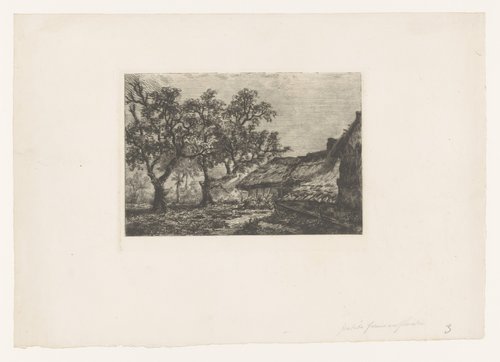
Boerenhofstede in Vlaanderen
ca. 1874
Medium
etching
Dimensions
180; 241
Rights
Public Domain
About this artwork
plaatrand: hoogte 180 mm x breedte 241 mm
Art Historical Context
**Boerenhofstede Vlaanderen (Farmstead in Flanders)** *ca. 1874, etching by Félix de Baerdeker (1848–1920)* Félix de Baerdema, a Belgian artist celebrated for his meticulous etchings of rural Flanders, captures the essence of traditional farm life in this delicate print. Measuring 180 mm high by 241 mm wide, *Boerenhofstede Vlaanderen* depicts a quintessential Flemish farmstead—likely a sturdy homestead with thatched roofs, outbuildings, and surrounding fields—evoking the region's agrarian heartland in the late 19th century. Created around 1874, it reflects de Baerdemaeker's passion for documenting vernacular architecture amid Belgium's shift toward industrialization. Etching, de Baerdemaeker's favored medium, allowed for intricate line work and tonal depth through acid-etched copper plates, producing affordable yet richly detailed reproductions. This technique suited his realistic style, part of a broader 19th-century movement to preserve disappearing rural scenes via printmaking, much like contemporaries in the Barbizon School admired pastoral simplicity. Culturally, the work holds significance as a nostalgic tribute to Flemish heritage, showcasing the low-country charm of Vlaanderen's farmsteads before modern changes altered the landscape. Visitors will appreciate its quiet poetry, inviting reflection on timeless rural beauty.