
Bon-Bon Vase
1800
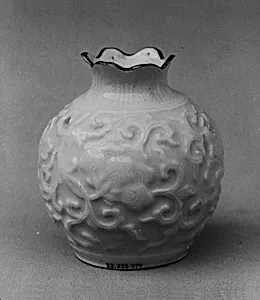
Medium
Porcelain; white glaze covered with design in high relief (Kyoto ware)
Dimensions
H. 3 3/16 in. (8.1 cm)
Classification
Ceramics
Culture & Period
Japan · Edo period (1615–1868)
Department
Asian Art
Museum
Metropolitan Museum of Art, New York, NY
Credit
Gift of Mrs. V. Everit Macy, 1923
Accession Number
23.225.270
Rights
Public Domain
Tags
Art Historical Context
Nestled in the refined world of Edo-period Japan (1615–1868), the *Bon-Bon Vase* by Eiraku Hozen, crafted around 1800, exemplifies the exquisite Kyoto ware tradition. This petite porcelain vessel, standing just 3 3/16 inches tall, features a pristine white glaze adorned with floral motifs in high relief, creating a tactile, sculptural elegance. Eiraku Hozen, part of a esteemed Kyoto pottery lineage, mastered these techniques, blending the durability of porcelain with delicate overglaze designs that evoke the natural beauty prized in Japanese aesthetics. During the Edo era's era of peace and urban sophistication, Kyoto kilns like Eiraku's produced wares for tea ceremonies, confections, and domestic display. The "bon-bon" name hints at its use as a sweetmeat dish, its small scale perfect for intimate settings. High-relief decoration—molded floral patterns rising boldly from the surface—demonstrates advanced ceramic artistry, where precision molding and glazing captured ephemeral blossoms in enduring form, reflecting wabi-sabi humility and seasonal transience. A gift to the Metropolitan Museum of Art from Mrs. V. Everit Macy in 1923, this vase invites visitors to appreciate Japan's ceramic legacy: functional beauty born from technical innovation and cultural harmony.
About the Artist
Eiraku Hozen · 1795–1854
Eiraku Hozen (1795–1854) was a celebrated Japanese ceramic artist and the sixteenth-generation head of the Nishimura family, a Kyoto dynasty of potters whose work was closely associated with the tastes of the imperial court and the refined aesthetic culture of the ancient capital. Operating under the artistic name Eiraku — a name that would become synonymous with a particular style of elegant, tec...