
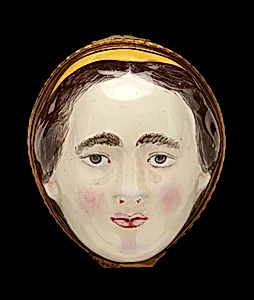
Bonbonniere
1750-1800
Medium
Decorative Arts
Classification
Decorative Arts
Department
Smithsonian Collection
Museum
Smithsonian American Art Museum
Credit
Smithsonian American Art Museum, Gift of John Gellatly
Accession Number
1929.8.245.64
Rights
Public Domain
Tags
About this artwork
The art of painting on enamel flourished in England during the second half of the eighteenth century. A French jeweler, Jean Toutin, had developed a new technique for painting on enamel, in which a gold base was covered first with white enamel, then painted with a design. This craft soon spread to England, where it was adopted by jewelers and goldsmiths. Their intricately painted boxes and curios were fashionable with the wealthy, who often bought them as souvenirs from their travels. Popular it...
Art Historical Context
Step into the elegant world of 18th luxury with this exquisite *Bonbonniere*, a small decorative box crafted between 1750 and 1800. Housed in the Smithsonian American Art Museum, this gem from the Decorative Arts collection was a gift from John Gellatly. Bonbonnieres like this one were designed to hold sweets, delighting the senses as much as the palate, and were prized by the wealthy elite as fashionable souvenirs from grand tours across Europe. The artistry shines through its enamel painting technique, pioneered by French jeweler Jean Toutin and enthusiastically adopted in England during the late 1700s. A gold base is first coated in white enamel, creating a luminous canvas for intricate designs—possibly featuring a delicate face, as suggested by its motifs. English jewelers and goldsmiths elevated this craft, producing coveted curios that blended functionality with opulence. These painted boxes epitomized the era's rococo flair, where everyday indulgences became miniature masterpieces. Culturally, such items reflected the sophistication of Georgian society, where snuff boxes, etuis for sewing tools, and bonbonnieres served as status symbols. This piece captures a fleeting moment of indulgence, inviting us to savor the ingenuity of artisans who turned metal and pigment into portable treasures. (198 words)
About the Artist
Unidentified ( ) · –