
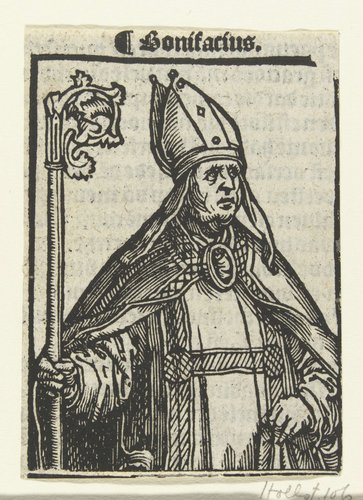
Bonifacius.
1517
Medium
paper
Dimensions
64; 89
Rights
Public Domain
About this artwork
blad: hoogte 89 mm x breedte 64 mm
Art Historical Context
**Bonifacius** is a delicate engraving by Lucas van Leyden, masterful Dutch artist of the Northern Renaissance, created in 1517. just 89 mm high 64 mm wide on paper, this intimate work exemplifies van Leyden's prowess in miniature printmaking. Born in Leiden around 1494, he was a child prodigy who revolutionized engraving with his precise burin technique, producing highly detailed images from small copper plates that could yield numerous impressions. The title refers to Saint Boniface, the 8th-century missionary known as the "Apostle to the Germans," suggesting a religious theme common in early 16th-century Northern art. Van Leyden's style blends intricate line work with lifelike expressions and textures, capturing the era's fascination with individualism and devotion amid the Reformation's stirrings. His engravings, prized for their clarity and narrative depth, influenced generations of printmakers like Albrecht Dürer, whom he met in Antwerp. This tiny yet monumental piece highlights the technical innovation of Renaissance prints, making sacred art accessible beyond grand altarpieces. Visitors will appreciate how van Leyden packs profound historical and spiritual resonance into a format small enough to hold in the palm.
About the Artist
Lucas van Leyden · 1484–1533
Lucas van Leyden (1494–1533) was a Dutch painter and printmaker who stands among the greatest engravers of the Northern Renaissance. Born in Leiden as either Lucas Hugensz or Lucas Jacobsz, he lived and worked primarily in his native city, achieving international renown that rivaled the German master Albrecht Dürer. Lucas van Leyden revolutionized Netherlandish printmaking and was among the first...