Ctrl K
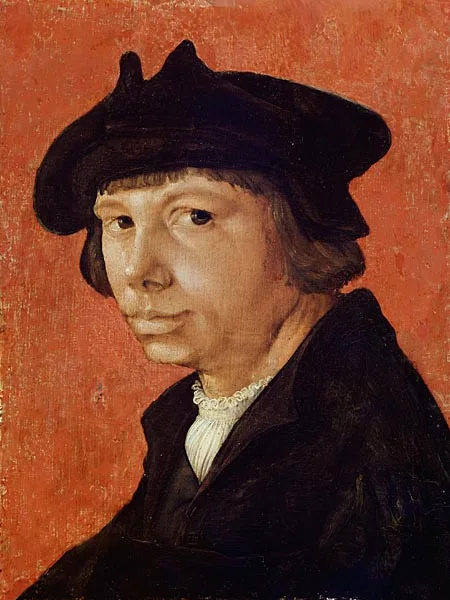
1484–1533
Occupations
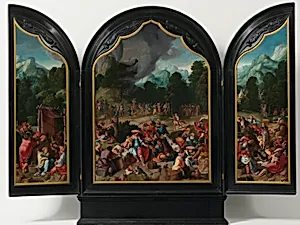
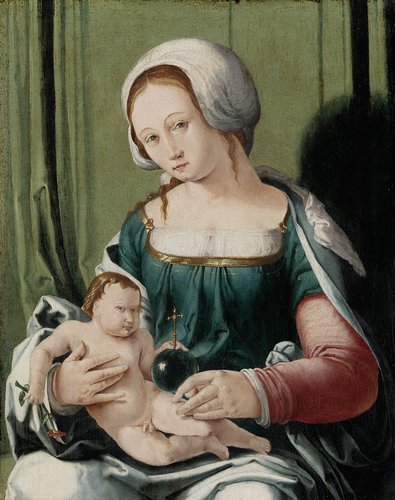
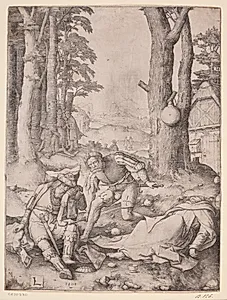
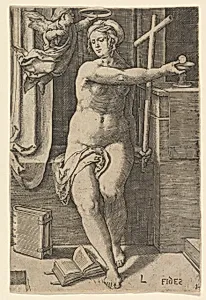
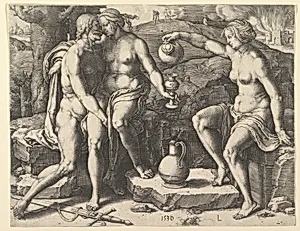
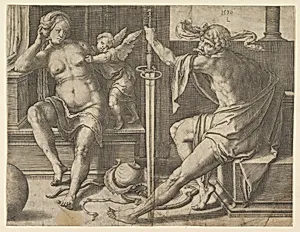
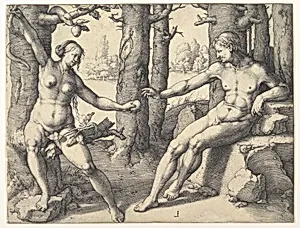
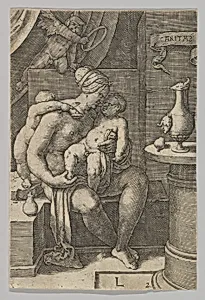
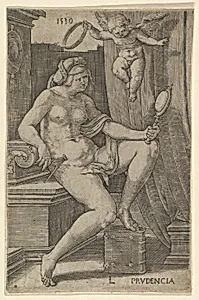
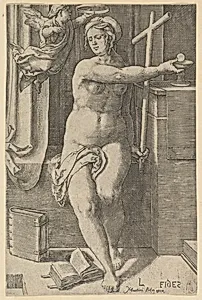
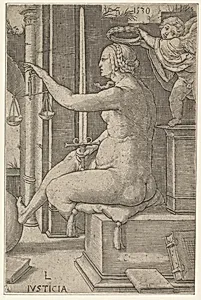
Lucas van Leyden (1494–1533) was a Dutch painter and printmaker who stands among the greatest engravers of the Northern Renaissance. Born in Leiden as either Lucas Hugensz or Lucas Jacobsz, he lived and worked primarily in his native city, achieving international renown that rivaled the German master Albrecht Dürer. Lucas van Leyden revolutionized Netherlandish printmaking and was among the first Dutch exponents of genre painting. His engravings are regarded as second only to those of Dürer, and his technical virtuosity in printmaking established him as perhaps the first great Renaissance master printmaker produced by the Netherlands. He combined the native Netherlandish tradition with influences from Dürer and Italian Renaissance styles, creating an approach that dominated Netherlandish printmaking for nearly a century. His works circulated widely across Europe, securing his reputation during his lifetime and inspiring generations of artists, including Rembrandt. Extraordinarily precocious, Lucas first trained with his father, Huygh Jacobszoon, before entering the workshop of Cornelis Engelbrechtsz in Leiden. His earliest known print, Mohammed and the Murdered Monk (1508), created when he was perhaps only fourteen, already reveals mature technical mastery. Within less than thirty years, he produced at least 168 engravings, consistently signed and dated from 1508 onwards. Lucas is credited with developing the technique of etching on copper rather than iron plates, allowing him to combine etching and line engraving in the same print. He met Dürer in Antwerp in 1521, an encounter with lasting consequences for both artists. After 1520, Lucas increasingly focused on painting, creating three major altarpieces including The Last Judgement (1526–1527) and The Dance around the Golden Calf (c. 1530). Lucas's distinctive style featured delicate engraving technique with subtle gradations of grey that produced spatial depth and atmospheric mood. He was among the first to employ aerial perspective in prints, and his work evolved from early half-length figures to complex multifigured compositions set against detailed wooded landscapes. His paintings, though fewer in number, demonstrated vivid imaginative powers, superb skill as a colorist, and fluid brushwork. He pioneered Netherlandish genre painting with works like Chess Players (c. 1508) and Card Players (c. 1517). Lucas van Leyden's legacy proved enduring and far-reaching. His technical innovations in printmaking and his narrative approach to both biblical and secular subjects influenced European art for generations. Rembrandt held him in the highest esteem, avidly collecting his prints and paying the extraordinary sum of 179 guilders for The Beggars in 1642. Lucas's engravings, particularly Ecce Homo (1510) and The Return of the Prodigal Son, remained touchstones for Dutch artists throughout the seventeenth century. His synthesis of Northern and Italian Renaissance styles helped establish the Netherlands as a major center of printmaking, and his works continue to be celebrated in major museums including the Rijksmuseum, the National Gallery in London, and the Metropolitan Museum of Art.
Wikidata/Wikimedia Commons