
Book 4, Fable 7: Pandora
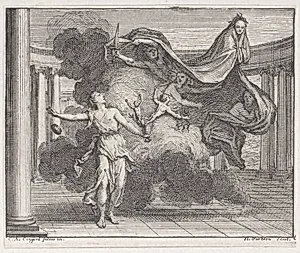
Medium
Etching and engraving
Dimensions
Sheet (Trimmed): 3 1/8 × 3 13/16 in. (8 × 9.7 cm)
Classification
Prints
Department
Drawings and Prints
Museum
Metropolitan Museum of Art, New York, NY
Credit
Rogers Fund, 1962
Accession Number
62.602.1036(12)
Rights
Public Domain
Art Historical Context
This small etching and engraving from 1719 illustrates "Pandora," the seventh fable in Book of an edition of Jean La Fontaine’s celebratedables. Designed by Charlesoine Coypel, a leading French painter of the early Rococo period, and expertly engraved by Nicolas-Henry Tardieu, the print translates the ancient myth into the elegant, narrative style favored for deluxe book illustrations of the time. The diminutive scale—just over three inches high—indicates it was created to accompany the text directly, allowing readers to encounter both story and image in a single intimate format. Etching and engraving techniques were ideally suited to such literary projects, combining the spontaneity of the etched line with the crisp detail of the burin to produce lively scenes that could be printed in large numbers. In this period, such prints helped disseminate La Fontaine’s witty moral tales across Europe, bridging elite literary culture with a growing audience of educated readers. Though modest in size, the work reflects the collaborative spirit of eighteenth-century French printmaking, where painters, engravers, and publishers worked together to make classical myths and fables visually accessible and enduringly popular.