
Bookbinding (Jild-i kitab)
Unknown Artist
18th–19th century
Medium
Pasteboard; painted and lacquered
Dimensions
H. 12 1/2 in. (31.8 cm) W. 7 3/8 in. (18.7 cm)
Classification
Codices
Department
Islamic Art
Museum
Metropolitan Museum of Art, New York, NY
Credit
Edward C. Moore Collection, Bequest of Edward C. Moore, 1891
Accession Number
91.1.739
Rights
Public Domain
Art Historical Context
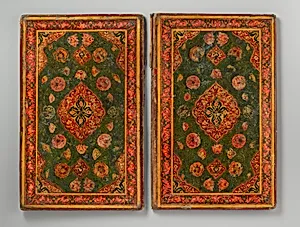
This exquisite bookbinding, known as *Jild-i kitab* (literally "book cover" in), hails from the Islamic world of the 18th–19th century. Crafted for a codex—a traditional manuscript book format—it exemplifies the reverence for the written word in Persianate cultures, where such bindings often encased sacred texts like the Quran poetic masterpieces. Measuring about 12½ by 7⅜ inches, its modest size belies the craftsmanship of an unknown artist, reflecting a time when book arts flourished under Mughal, Safavid, or Ottoman patronage. Made from pasteboard—a sturdy layered material of compressed paper—the cover is painted with intricate designs and finished in lustrous lacquer. This technique, popular in Persian and Indian workshops, provided both aesthetic brilliance and protection against wear, allowing vibrant colors and gold accents to endure. Lacquering created a glossy, jewel-like surface, elevating everyday objects into treasures of portable art. In Islamic tradition, bookbindings were status symbols devotional items, blending utility with spiritual beauty. Part of the Edward C. Moore Collection at The Metropolitan Museum of Art (bequest of 1891), this piece invites us to appreciate the unsung artistry behind the books that shaped empires and enlightened minds.