
Border
Unknown Artist
16th–17th century
Medium
Drawnwork, linen and silk
Dimensions
H. 8 1/2 x L. 8 inches 21.6 x 20.3 cm
Classification
Textiles-Laces
Culture
Italian or Greek
Department
European Sculpture and Decorative Arts
Museum
Metropolitan Museum of Art, New York, NY
Credit
Rogers Fund, 1909
Accession Number
09.50.75
Rights
Public Domain
Art Historical Context
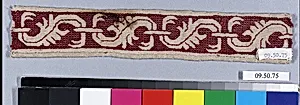
Nestled in the Metropolitan Museum of Art's European Sculpture and Decorative collection, this delicate *Border* exemplifies the exquisite needlework of the 16th–17th centuries. Crafted from linen and silk using the drawnwork technique—where threads are meticulously withdrawn from the fabric and the remaining ones are stitched into intricate openwork patterns—this small piece (8½ x 8 inches) showcases the precision and patience of anonymous artisans. Likely Italian or Greek in origin, it reflects the Renaissance-era fusion of craftsmanship from Mediterranean lace-making centers, where such borders adorned collars, cuffs, altar linens, or table edges. Drawnwork, a precursor to more complex bobbin laces, highlights the era's growing appreciation for transparent, geometric motifs that mimicked metalwork or embroidery. Its cultural significance lies in the social status it conferred: fine textiles were luxury goods, traded across Europe and the Levant, symbolizing piety, wealth, and technical virtuosity. Acquired through the Rogers Fund in 1909, this *Border* invites us to marvel at the unseen hands behind decorative arts, bridging everyday elegance with high artistry. (178 words)