
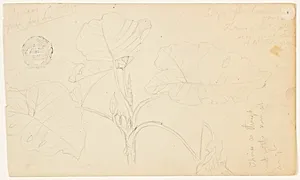
Botanical Study, Ecuador
Classification
nature studies
Department
Smithsonian Collection
Museum
Smithsonian American Art Museum
Credit
Gift of Louis P. Church
Accession Number
1917-4-225
Rights
Public Domain
About this artwork
Research in Progress
Art Historical Context
Frederic Edwin Church, a leading figure of the Hudson River School, *Botanical Study, Ecuador in 1857 during second expedition to South America Inspired by explorer Alexander von Humboldt's romantic vision of nature's grandeur, Church journeyed to Ecuador to capture its exotic flora and dramatic landscapes firsthand. This precise nature study reflects his meticulous fieldwork, likely sketched amid the Andean wilderness to inform larger masterpieces like *Heart the Andes* (1859). As a quintessential example of 19th-century American landscape art, the work showcases Church's commitment to scientific accuracy and sublime beauty. Hudson River School artists elevated nature studies from mere sketches to profound expressions of divine order, blending empirical observation with spiritual awe. Though the medium remains unidentified amid ongoing research, such studies were essential preparatory tools, revealing Church's keen eye for botanical detail—vital in an era when European collectors prized New World specimens. Today, this piece graces the Smithsonian American Art Museum, gifted by Louis P. Church, the artist's son. It invites visitors to ponder how intimate observations fueled epic visions, bridging art, science, and exploration in America's golden age of landscape painting.