
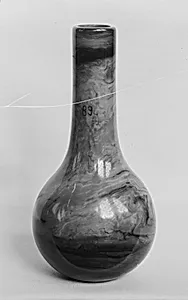
Bottle
Unknown Artist
18th century
Medium
Agate
Dimensions
H. 5 7/8 in. (14.9 cm)
Classification
Hardstone
Culture
China
Department
Asian Art
Museum
Metropolitan Museum of Art, New York, NY
Credit
Gift of Heber R. Bishop, 1902
Accession Number
02.18.896
Rights
Public Domain
Art Historical Context
This exquisite 18th-century Chinese bottle, carved from agate, exemplifies the masterful hardstone craftsmanship of Qing dynasty artisans. Standing just 5 7/8 inches (14.9 cm) tall, its compact form suggests it was designed as a portable luxury item, likely for holding snuff or precious oils—a common practice among the elite. Agate, a banded variety of chalcedony prized for its translucent beauty and durability, was a favored medium in imperial workshops, where skilled lapidaries transformed raw stone into refined vessels through meticulous carving and polishing techniques. The bottle's creation reflects China's long tradition of hardstone carving, dating back millennia but reaching new heights of sophistication in the 18th century. Artisans exploited the stone's natural veining to create dynamic patterns, enhancing the object's aesthetic appeal without added decoration. Such pieces symbolized refinement and connoisseurship, often collected by scholars and officials. Generously gifted to the Metropolitan Museum of Art in 1902 by Heber R. Bishop, a prominent collector of Asian hardstones, this bottle invites visitors to appreciate the subtlety of Chinese decorative arts—where form, material, and subtle natural beauty converge in timeless elegance.