
Bottle Rim Fragments
Unknown Artist
4th century
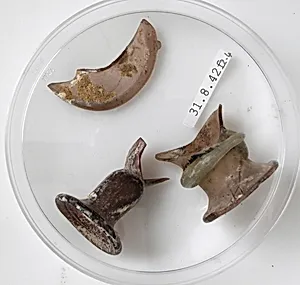
Medium
Glass
Dimensions
Storage (petri dish diam.): 3 7/16 in. (8.8 cm)
Classification
Glass-Vessels
Culture
Coptic
Department
Medieval Art
Museum
Metropolitan Museum of Art, New York, NY
Credit
Rogers Fund, 1931
Accession Number
31.8.42.31a-c
Rights
Public Domain
Tags
Art Historical Context
These delicate *Bottle Rim Fragments* a glimpse into everyday life 4th-century Coptic Egypt, a vibrant when Christianity flourished amid ancient Egyptian and Roman influences. Crafted from glass, these shards are remnants of what were likely practical vessels—perhaps for storing perfumes, oils, or unguents—common in households and religious settings. Displayed in a petri dish measuring just 3 7/16 inches (8.8 cm) across, they highlight the humility of archaeological treasures preserved at The Metropolitan Museum of Art, through the Rogers Fund in1931. Glassmaking reached sophisticated heights by the 4th century, with Coptic artisans excelling in blowing and shaping molten glass into functional forms. These fragments, classified as glass vessels in the Medieval Art department, exemplify the durability and translucency prized in Coptic material culture. Often iridescent with age, such pieces bridged utility and subtle artistry, reflecting a society's ingenuity without ostentation. Though the artist remains unknown, these rims whisper stories of a pivotal time: Egypt's transition into the Byzantine world, where glassware symbolized both trade and devotion. Visitors, pause to appreciate how these tiny survivors connect us to lives lived over 1,600 years ago.