
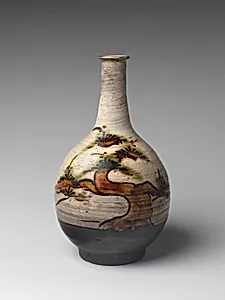
Bottle with Decoration of Pine Tree
Unknown Artist
ca. mid-17th century
Medium
Stoneware with iron-painted design and copper-green glaze over brushed white slip (Takeo Karatsu ware)
Dimensions
H. 13 in. (33 cm); Diam. 7 1/2 in. (19.1 cm)
Classification
Ceramics
Culture & Period
Japan · Edo period (1615–1868)
Department
Asian Art
Museum
Metropolitan Museum of Art, New York, NY
Credit
The Harry G. C. Packard Collection of Asian Art, Gift of Harry G. C. Packard, and Purchase, Fletcher, Rogers, Harris Brisbane Dick, and Louis V. Bell Funds, Joseph Pulitzer Bequest, and The Annenberg Fund Inc. Gift, 1975
Accession Number
1975.268.452
Rights
Public Domain
Tags
Art Historical Context
This elegant bottle, adorned with a striking pine tree motif, exemplifies Takeo Karatsu ware from Edo period (ca. mid-17th). Crafted from stoneware, it features iron-painted design of the resilient pine—symbolizing longevity and endurance in Japanese culture—applied over a brushed white slip, then finished with a luminous copper-green. Standing 13 inches tall with a 7½-inch diameter its robust form and earthy reflect the rustic yet refined aesthetic of Karatsu pottery, produced in Saga Prefecture. Takeo Karatsu ware, a regional variant of the broader Karatsu tradition, emerged during a time of relative peace and cultural flourishing in the Edo era, when tea ceremonies and domestic arts thrived. Potters fired these pieces in kilns using wood ash, yielding natural variations in glaze that added unique character to each vessel. Often used for flower arrangements or sake, such bottles bridged utilitarian function and artistic expression. Part of the Metropolitan Museum of Art's renowned Packard Collection, this anonymous masterpiece highlights Japan's mastery of layered glazing techniques, blending iron's bold lines with copper's subtle sheen for visual depth. A testament to Edo-era craftsmanship, it invites visitors to appreciate the timeless harmony of nature and artistry in Asian ceramics.