
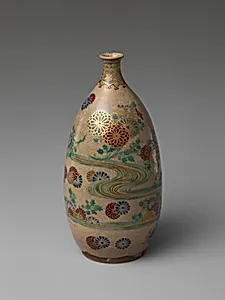
仁清様式 花文徳利|Ninsei-style Sake Bottle with Floral Patterning
Unknown Artist
mid-18th century
Medium
Clay with a crackled transparent glaze, colored enamels, and gold (Kyoto ware)
Dimensions
H. 8 1/2 in. (21.6 cm); Diam. 3 3/4 in. (9.5 cm)
Classification
Ceramics
Culture & Period
Japan · Edo period (1615–1868)
Department
Asian Art
Museum
Metropolitan Museum of Art, New York, NY
Credit
Gift of Charles Stewart Smith, 1893
Accession Number
93.3.218
Rights
Public Domain
Tags
Art Historical Context
This elegant sake bottle, known as a *tokkuri*, exemplifies the renowned Ninsei style of Kyoto ware from Japan's Edo period (1615–1868). Crafted in the mid-18th century by an unknown artist, it reflects the refined aesthetic popularized by the master potter Nonomura Ninsei in the late 17th century. During the Edo era, a time of relative peace and urban prosperity, Kyoto ceramics like this became prized for their luxurious overglaze decorations, blending functionality with artistry for the tea ceremony and sake service among the growing merchant class. The bottle's clay body is coated in a signature crackled transparent glaze, which develops fine, web-like fissures during firing, adding a tactile, aged elegance that mimics precious lacquerware. Vibrant colored enamels depict floral motifs—likely symbolizing seasonal beauty and abundance—enhanced by touches of gold for a shimmering opulence. Standing at 8½ inches tall, its graceful form and intricate patterning highlight Kyoto ware's technical mastery, where low-fired enamels allowed bold colors impossible in traditional high-fired stoneware. As a gift to the Metropolitan Museum of Art in 1893, this piece captures Japan's ceramic golden age, inviting visitors to appreciate how everyday objects like sake vessels embodied cultural sophistication and nature's fleeting charm.