
Bound print
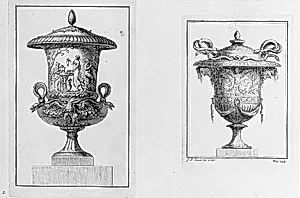
Medium
Bound print
Classification
Bound print
Department
Smithsonian Collection
Museum
Smithsonian American Art Museum
Credit
Purchased for the Museum by the Advisory Council
Accession Number
1921-6-204-61
Rights
Public Domain
About this artwork
Research in Progress
Art Historical Context
Gilles Paul Cauvet (1–1788), a skilled French engraver and ornamental designer, created this intriguing *Bound Print* during the vibrant Rococo era of 18th-century France. Active in Paris, Cauvet specialized in detailed prints that served as blueprints for luxury furniture, interiors, and decorative objects. His works bridged fine art and applied design, influencing artisans across Europe with their elegantishes, scrolling motifs, and playful asymmetry—hallmarks of the Rococo's opulent whimsy. As a "bound print," piece likely originates from a collected volume of designs, a common format for disseminating ornamental patterns to craftsmen and collectors. Such prints were essential tools in the decorative arts trade, preserving innovative ideas amid the pre-industrial age. Though the exact date remains unknown and research is ongoing, its presence in the Smithsonian American Art Museum's collection highlights the enduring appeal of French design in American institutions. Purchased for the museum by the Advisory Council, this artwork invites visitors to ponder Cauvet's legacy: a testament to how printed imagery fueled creativity in an era of royal extravagance and Enlightenment refinement. Delve deeper as scholarly work progresses!