
Bound print
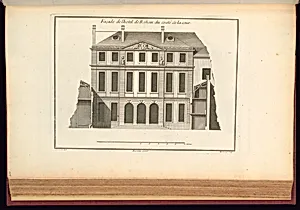
Medium
Bound print
Classification
Bound print
Department
Smithsonian Collection
Museum
Smithsonian American Art Museum
Credit
Purchased for the Museum by the Advisory Council
Accession Number
1921-6-538-104
Rights
Public Domain
About this artwork
Research in Progress
Art Historical Context
**Bound Print by Jean Mariette (1727)** Jean Mariette, a renowned French engraver, print publisher, and art dealer1660–1742), created this *Bound Print* in 1727, a period of vibrant artistic exchange during France's Regency era under Philippe II, Duke of Orléans. Mari came from a dynasty of art connoisseurs, and his bridged the late Baroque and emerging Rococo styles, producing intricate engravings that popularized designs by masters like Watteau and Audran. As part of the Smithsonian American Art Museum's collection—purchased by the Advisory Council—this piece highlights transatlantic artistic influences, connecting European print culture to American collections. Bound prints like this one were prized in the 18th century as affordable yet elegant volumes, often compiling reproductive engravings for collectors, scholars, and designers. The medium allowed for precise detailing and mass dissemination of motifs—from architecture to ornamentation—fostering a shared visual language across Europe. Mariette's technical mastery in etching and burin work ensured durability and finesse, making such volumes enduring references. Currently under research at the Smithsonian, this artwork invites us to explore the global flow of ideas in the Age of Enlightenment. What scenes or patterns does it preserve? A testament to printmaking's role in democratizing art.