
Bow
Unknown Artist
ca. 1500
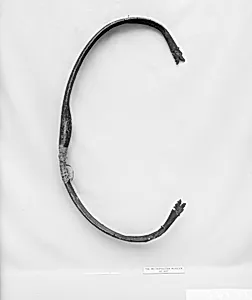
Medium
Wood, sinew, horn (bovine, elk), polychromy
Dimensions
L. 23 1/2 in. (59.7 cm); Gr. W. 1 5/8 in. (4.1 cm)
Classification
Archery Equipment-Bows
Culture
Italian or Indo-Persian
Department
Arms and Armor
Museum
Metropolitan Museum of Art, New York, NY
Credit
Rogers Fund, 1913
Accession Number
13.146
Rights
Public Domain
Art Historical Context
This elegant composite bow, dating to around 1500, exemplifies the masterful craftsmanship of archery equipment from either Italian or Indo-Persian traditions. Crafted from wood, sinew, and horn sourced from bovine and elk, it measures 23½ inches in length with a grip width of 1⅝ inches. The addition of polychromy—vibrant painted decorations—elevates it beyond mere utility, blending functionality with artistic flair. Such materials were ingeniously layered to create a powerful, flexible recurve design, capable of delivering lethal force in battle or the hunt. Straddling potential European Renaissance influences and the sophisticated bow-making heritage of Indo-Persian cultures, this piece reflects a pivotal era of cross-cultural exchange along trade routes like the Silk Road. In Italy, archery waned with the rise of firearms, while Indo-Persian masters perfected composite bows for mounted warfare, prized by Mughal and Ottoman elites. Its uncertain origin underscores the shared technological ingenuity of the time. Acquired through the Rogers Fund in 1913 and housed in The Metropolitan Museum of Art's Arms and Armor Department, this bow invites visitors to ponder the artistry behind ancient weaponry—where engineering met aesthetics in a delicate balance of tension and beauty.