
Bowl
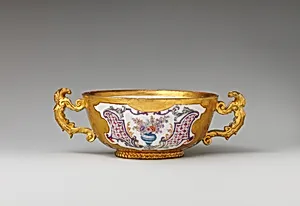
Medium
Hard-paste porcelain
Dimensions
H. with handles 2 13/16 in. (7.1 cm.), W. with handles 8 1/8 in. (20.6 cm.), Diam. 5 3/4 in. (14.6 cm.)
Classification
Ceramics-Porcelain
Culture
Austrian, Vienna
Department
European Sculpture and Decorative Arts
Museum
Metropolitan Museum of Art, New York, NY
Credit
Gift of R. Thornton Wilson, in memory of Florence Ellsworth Wilson, 1954
Accession Number
54.147.92
Rights
Public Domain
Tags
Art Historical Context
This elegant bowl hails from the Vienna porcelain manufactory during the Claudius Innocentius du Paquier period, around 1735–40. in 1718 by entrepreneur du Paquier, it was one of Europe's earliest producers of hard-paste porcelain durable, translucent material made from kaolin clay, fired at high temperatures to mimic coveted Chinese imports. Measuring just under 3 inches tall with handles and 5¾ inches in diameter, this petite vessel exemplifies the refined scale of 18th-century tableware, likely used for serving confections or preserves. Artistically, the bowl reflects Vienna's ambitious rivalry with Saxony's Meissen factory, blending technical innovation with lavish decoration. Its surface, adorned with floral motifs (as suggested by period tags), showcases the manufactory's mastery of underglaze painting and gilding, techniques that allowed vibrant colors to withstand multiple firings. These flowers evoke the opulent Baroque aesthetic of Habsburg courts, symbolizing abundance and imperial luxury. Culturally, such pieces highlight Austria's brief but brilliant porcelain era before the factory's imperial takeover in 1744. Gifted to the Metropolitan Museum of Art in 1954, this bowl offers a tangible glimpse into Enlightenment-era craftsmanship, bridging Eastern ceramic traditions with European ingenuity. Visitors, imagine it gracing a candlelit Viennese banquet!