
Basket
c. 1770
Medium
Soft-paste porcelain, underglaze blue, polychrome enamels and gilding
Dimensions
18.1 × 22.8 cm (7 1/8 × 9 in.)
Classification
tableware
Department
Applied Arts of Europe
Museum
Art Institute of Chicago
Accession Number
76476
Rights
Public Domain
Art Historical Context
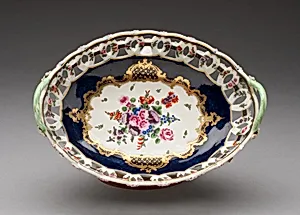
This elegant basket from the Worcester Porcelain, crafted around 1770, exemplifies the height of 18th-century British porcelain artistry. Measuring 18.1 × 22.8 cm, this soft-paste porcelain piece—decorated with underglaze blue, vibrant polychrome enamels, intricate gilding—was designed as luxurious tableware, likely for serving sweets or fruit at grand dinners. Worcester, founded in 1751, was a leader in England's porcelain industry during the Dr. Wall period rivaling elite European makers like Meissen by blending technical innovation with opulent design. Soft-paste porcelain, made from clay mixed with ground glass and fired at lower temperatures, allowed for the factory's signature translucency and fine detail, a cheaper alternative to true hard-paste until later refinements. The underglaze blue provided a durable cobalt base, while overglaze enamels and gilding added colorful flowers, pierced basketwork, and rococo flourishes—hallmarks of the period's taste for playful, asymmetrical elegance inspired by nature and continental styles. Housed in the Art Institute of Chicago's Applied Arts of Europe collection, this basket reflects the cultural status of porcelain as a symbol of wealth and refinement in Georgian Britain. It highlights how factories like Worcester democratized luxury goods, adorning middle- and upper-class tables while showcasing masterful craftsmanship that still captivates today.
About the Artist
Worcester Porcelain Factory · 1751–1783
**Worcester Porcelain Factory (1751–1783)** The Worcester Porcelain Factory, often called the Dr. Wall Period, was established in 1751 in Worcester, England, by physician Dr. John Wall and apothecary William Davis, who rallied 13 local businessmen to invest £4,500. Site at Warmstry House on the River Severn, the "Worcester Tonquin Manufactory" produced soft-paste porcelain using a steatite (soapr...