
Bowl
Unknown Artist
300–100 BCE
Medium
Ceramic
Dimensions
H. 3 7/8 × Diam. 4 7/8 in. (9.8 × 12.4 cm)
Classification
Ceramics-Containers
Culture
Paracas
Department
Arts of Africa, Oceania, and the Americas
Museum
Metropolitan Museum of Art, New York, NY
Credit
Gift of Nathan Cummings, 1963
Accession Number
63.232.99
Rights
Public Domain
Art Historical Context
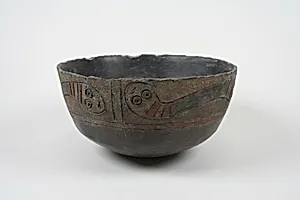
This elegant ceramic bowl, crafted by an unknown Paracas artist between 300 and 100 BCE, offers a glimpse into the daily life of one of ancient Peru's most intriguing pre-Inca cultures. The Paracas people, who thrived along Peru's southern coast, were masterful potters whose vessels served both practical purposes—like holding food or liquids—and ritual ones. Dating to the Late Paracas phase, this bowl reflects a time of cultural flourishing before the rise of the Nazca civilization. Made of fired clay, the bowl stands just under 4 inches tall with a diameter of nearly 5 inches, its compact form ideal for handheld use. Paracas ceramics are celebrated for their technical finesse, often involving coil-building and slip decoration, though this example highlights the culture's skill in producing sturdy, functional containers. Such pieces were essential to household and ceremonial practices, underscoring the Paracas' deep connection to their environment and spiritual world. Now housed in the Metropolitan Museum of Art's Department of the Arts of Africa, Oceania, and the Americas—thanks to a 1963 gift from Nathan Cummings—this unassuming bowl invites us to ponder the artistry in everyday objects from over 2,000 years ago. Pause and imagine it in a desert adobe home, bridging ancient hands to ours.