
Bowl
Unknown Artist
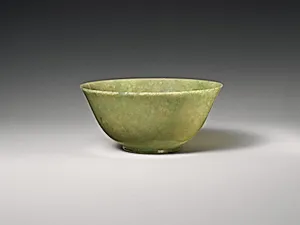
Medium
Jadeite, yellowish green
Dimensions
H. 2 13/16 in. (7.2 cm); W. 6 13/16 in. (17.3 cm)
Classification
Jade
Culture & Period
China · Qing dynasty (1644–1911), Kangxi period (1662–1722)
Department
Asian Art
Museum
Metropolitan Museum of Art, New York, NY
Credit
Gift of Heber R. Bishop, 1902
Accession Number
02.18.423
Rights
Public Domain
Art Historical Context
This elegant yellowish-green jadeite bowl hails from China's Qing dynasty, specifically the Kangxi period (166–1722), a golden age of imperial artistry under Emperor Kangxi's patronage. Measuring just 2 13/16 inches high and 6 13/16 inches wide, its shallow, open form exemplifies the refined simplicity prized in Kangxi jade vessels, likely used for offerings, rituals, or as a luxurious tableware among the elite. Jadeite, a rare and translucent hardstone, held profound cultural significance in imperial China, symbolizing purity, immortality, and moral virtue—qualities echoed in Confucian ideals. Artisans employed masterful techniques like incision and polishing to highlight the stone's natural luster and subtle color variations, transforming raw material into a shimmering gem. During the Kangxi era, state-sponsored workshops elevated jade carving to new heights, blending technical precision with aesthetic harmony. Now part of the Metropolitan Museum of Art's Asian Art collection, this bowl was a gift from Heber R. Bishop in 1902, reflecting early 20th-century fascination with Chinese treasures. Visitors will appreciate its serene beauty, a testament to the enduring allure of Qing craftsmanship.