
Bowl
Unknown Artist
mid-14th century
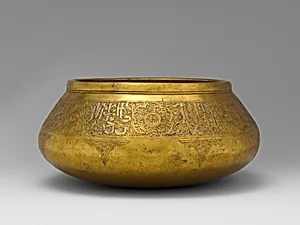
Medium
Brass; engraved and inlaid with silver
Dimensions
H. 4 5/16 in. (11 cm) Diam. 9 3/8 in. (23.8 cm) Wt. 38.7 oz. (1097.2 g)
Classification
Metal
Department
Islamic Art
Museum
Metropolitan Museum of Art, New York, NY
Credit
Edward C. Moore Collection, Bequest of Edward C. Moore, 1891
Accession Number
91.1.593
Rights
Public Domain
Art Historical Context
This elegant brass bowl, crafted by an unknown artist in the mid-14th century, exemplifies the pinnacle of Islamic metalworking artistry. Standing just over 4 inches tall with a 9-inch diameter and weighing nearly 2.5 pounds, it was forged from brass and adorned through precise engraving followed by silver inlay—a labor-intensive technique known as *tafsir* or damascening. This method allowed artisans to create shimmering, intricate patterns that catch the light, transforming functional objects into luxurious treasures. Hailing from the Islamic world during a golden age of cultural flourishing—amid the Mamluk Sultanate and Ilkhanid influences—the bowl reflects the era's technical virtuosity and aesthetic refinement. Such vessels were prized possessions, likely used for serving sweets, beverages, or as ceremonial items in affluent households, symbolizing wealth and hospitality. The silver inlays not only enhanced durability but also elevated the piece's visual splendor, blending utility with opulence. Now part of the Metropolitan Museum of Art's Edward C. Moore Collection (bequeathed in 1891), this bowl invites us to marvel at the anonymous genius of medieval Islamic craftsmen, whose innovations continue to inspire today.