
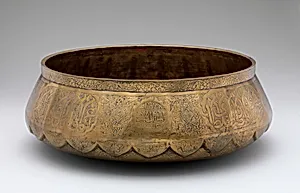
Basin of Sultan Qaytbay
Unknown Artist
ca. 1468–96
Medium
Brass; inlaid with silver
Dimensions
H. 5 in. (12.7 cm) Max Diam. 14 1/2 in. (36.8 cm)
Classification
Metal
Department
Islamic Art
Museum
Metropolitan Museum of Art, New York, NY
Credit
Edward C. Moore Collection, Bequest of Edward C. Moore, 1891
Accession Number
91.1.565
Rights
Public Domain
Art Historical Context
Nestled in the Islamic Art collection of the Metropolitan Museum of, the *Basin of Sultan Qtbay* (ca. 1468–96) exemplifies the exquisite metalwork of Egypt's Mamluk dynasty. Crafted during the reign of Sultan Qaytb, a powerful Circassian ruler who transformed Cairo into a glittering center of culture and architecture, this basin likely served as a luxury vessel for ritual handwashing in elite households or palaces. Its inscription or blazon associating it with the sultan underscores its royal patronage, reflecting the era's blend of power, piety, and artistry. Made of brass inlaid with silver, the basin showcases masterful *tafsir* technique—where intricate silver wires and sheets are hammered into engraved brass channels, creating shimmering motifs of arabesques, calligraphy, and possibly heraldic symbols. Standing just 5 inches tall with a 14½-inch diameter, its wide, shallow form and probable openwork rim highlight both functionality and opulence, designed to catch the light and delight the eye. This artifact, from the Edward C. Moore Collection (1891), transports visitors to a golden age of Islamic craftsmanship, where everyday objects became canvases for virtuosic skill and cultural splendor. A testament to Mamluk innovation, it reminds us how metalwork bridged utility and splendor in the medieval Islamic world.