
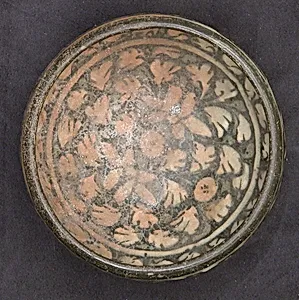
Bowl
Unknown Artist
14th century
Medium
Stonepaste; underglaze painted
Dimensions
H. 2 7/16 in. (6.2 cm) Diam. 5 1/2 in. (14 cm)
Classification
Ceramics
Department
Islamic Art
Museum
Metropolitan Museum of Art, New York, NY
Credit
The Grinnell Collection, Bequest of William Milne Grinnell, 1920
Accession Number
20.120.14
Rights
Public Domain
Art Historical Context
This elegant 14th-century bowl crafted by an unknown artist, exemplifies the refined ceramic traditions of the Islamic world. Housed in the Metropolitan Museum of Art's Department of Islamic Art, it just 2 7/16 inches high and 5 1/2 inches in diameter—perfectly sized for daily use in a medieval household, perhaps for serving fruits, sweets, or beverages. Part of The Grinnell Collection,athed in 1920, it reflects the global exchange of artistic ideas during the height of Islamic cultural flourishing under dynasties like the Ilkhanids or Mamluks. The bowl's medium, stonepaste (also known as fritware), was a groundbreaking Islamic innovation from the 10th century onward. This composite material—made from quartz, clay, and glass frit—created a white, porcelain-like body that was ideal for intricate decoration, compensating for the absence of true Chinese porcelain in the region. The underglaze painting technique involved applying pigments beneath a transparent glaze before firing, ensuring vibrant, durable colors that withstood everyday handling. This method, prominent in Persian and Syrian workshops, allowed for sophisticated motifs while prioritizing functionality. As a testament to Islamic artisans' mastery, this unassuming bowl highlights how ceramics bridged utility and beauty, influencing later European pottery. Visitors will appreciate its subtle elegance, a window into the opulent yet practical world of medieval Islam.