
Bowl
Unknown Artist
17th century
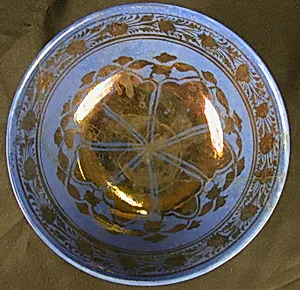
Medium
Stonepaste; luster-painted on opaque blue glaze
Dimensions
H. 3 in (7.6 cm) Diam. 7 1/8 in. (18.1 cm)
Classification
Ceramics
Department
Islamic Art
Museum
Metropolitan Museum of Art, New York, NY
Credit
Theodore M. Davis Collection, Bequest of Theodore M. Davis, 1915
Accession Number
30.95.30
Rights
Public Domain
Art Historical Context
This elegant 17th-century bowl the Islamic Art collection exemplifies the masterful ceramic traditions of the Islamic world. Crafted from stonepaste—a fine, vitreous body developed by Islamic potters to imitate Chinese porcelain—it stands just 3 inches high and 7⅛ inches in diameter, perfect for serving sweets, fruits, or beverages in a refined household setting. The opaque blue glaze provides a striking, jewel-like ground, while intricate luster-painting adds shimmering metallic highlights that catch the light, creating an effect of luxury and otherworldliness. Lusterware, a technique perfected in the Islamic lands from the 9th century onward, involved applying metallic compounds over the glazed surface and firing in a reducing atmosphere to produce iridescent gold and ruby tones. By the 17th century, during periods like the Safavid dynasty in Iran, such wares reached new heights of sophistication, blending technical innovation with poetic motifs often inspired by nature, poetry, or courtly life. Though the artist remains unknown, this bowl reflects the era's emphasis on beauty in everyday objects, symbolizing cultural refinement and trade connections across Asia and Europe. Acquired through the Theodore M. Davis Collection and gifted to the Metropolitan Museum of Art in 1915, it invites us to appreciate the enduring allure of Islamic ceramics—functional art that transformed humble clay into treasures.