
Bowl
Unknown Artist
9th–10th century
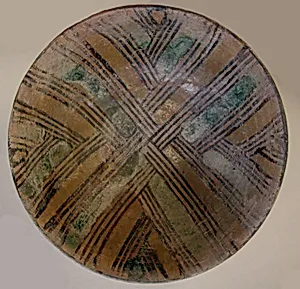
Medium
Earthenware; buff slip, underglaze painted in polychrome pigments under transparent glaze
Dimensions
H. 3 1/16 in. (7.8 cm) Diam. 7 11/16 in. (19.6 cm) Base: 4 in. (10.2 cm)
Classification
Ceramics
Department
Islamic Art
Museum
Metropolitan Museum of Art, New York, NY
Credit
Rogers Fund, 1940
Accession Number
40.170.102
Rights
Public Domain
Art Historical Context
This elegant earthenware bowl, crafted by an unknown artist in the9th–10th, exemplifies the golden age of Islamic ceramics. Hailing from the Islamic world—likely regions like Iraq or Iran—it measures a modest 3 1/16 inches (7.8 cm) in height and 7 11/16 inches (19.6 cm) in, making it a practical yet refined vessel for daily use, such as serving food or beverages. The bowl's medium showcases innovative techniques of the era: a buff slip (a creamy clay coating) forms the base, over which polychrome pigments in multiple vibrant colors were painted beneath a transparent glaze. This underglaze method, fired at high temperatures, preserved the vivid hues and glossy finish, preventing fading—a breakthrough that influenced pottery across the Islamic realm and beyond. Such bowls often featured geometric patterns, floral motifs, or calligraphy, blending functionality with artistry in line with Islamic aniconic traditions. Acquired through the Rogers Fund in 1940 and now in the Metropolitan Museum of Art's Islamic Art Department, this piece highlights the cultural flourishing under Abbasid patronage, where ceramics became a canvas for technical mastery and aesthetic harmony, bridging everyday life and exquisite design.