
Bowl
Unknown Artist
12th–13th century
Medium
Stonepaste; underglaze painted
Dimensions
H. 2 1/2 in. (6.4 cm) Diam. 5 5/16 in. (13.5 cm)
Classification
Ceramics
Department
Islamic Art
Museum
Metropolitan Museum of Art, New York, NY
Credit
H.O. Havemeyer Collection, Gift of Horace Havemeyer, 1941
Accession Number
41.165.4
Rights
Public Domain
Tags
Art Historical Context
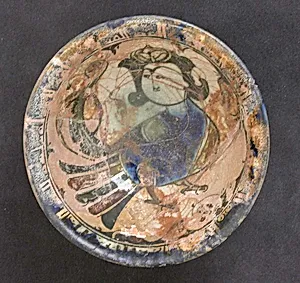
This delicate stonepaste bowl, crafted by an unknown artist in the12th–13th, exemplifies the exquisite ceramics of the Islamic world, likely from regions like Iran or Syria during the Seljuk era. Measuring just 2½ inches high and 5⅜ inches in diameter, its modest size belies its artistic ambition, serving as both a functional vessel and a canvas for storytelling. Housed in the Metropolitan Museum of Art's Art Department (gift of the H.O. Havemeyer Collection, 1), it invites visitors to marvel at the ingenuity of medieval potters who transformed everyday objects into treasures. The bowl's medium—stonepaste, or fritware, a composite of quartz, clay, and glass frit—marked a pivotal innovation in Islamic ceramics. This technique mimicked the translucency of coveted Chinese porcelain while allowing vibrant underglaze painting: designs were applied directly onto the unfired body before a transparent glaze sealed them in the kiln. The result? Durable pieces with bold, enduring colors and motifs, including mythical creatures that evoke ancient folklore—perhaps griffins or harpies—blending Persian, Central Asian, and classical influences. In a time of cultural flourishing along Silk Road trade routes, such bowls highlight Islam's embrace of fantastical imagery for decoration, unbound by strict religious iconography. They remind us how artisans elevated the mundane, sparking wonder in daily rituals like sharing meals.