
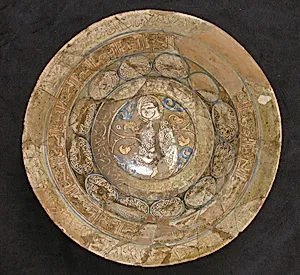
Bowl
Unknown Artist
13th century
Medium
Stonepaste; luster-painted
Classification
Ceramics
Department
Islamic Art
Museum
Metropolitan Museum of Art, New York, NY
Credit
Gift of J. Richardson Dilworth
Accession Number
64.301
Rights
Public Domain
Tags
Art Historical Context
This exquisite 13th-century bowl crafted by an unknown artist, exemplifies the of Islamic ceramic artistry. Housed in the Metropolitan Museum of Art's Islamic Art Department as a gift from J. Richardson Dilworth, it features human figures rendered in a vibrant, luster-painted style on stonepaste—a composite body of quartz, clay, and frit developed in the Islamic world to mimic the translucency of Chinese porcelain, which was highly prized but unavailable. The luster-painting technique, metallic oxides fired in a reducing atmosphere to create a shimmering, iridescent glow, reached its zenith in the 13th century across regions like Iran and Syria. This method allowed artisans to produce jewel-like effects that caught the light, transforming everyday vessels into luxurious objects fit for courts and wealthy patrons. The bowl's surface likely depicts lively human figures, a motif that persisted in Islamic ceramics despite religious taboos on figural representation in religious contexts, highlighting the secular creativity of the era. During the 13th century—a time of cultural exchange amid the Mongol invasions—this artwork reflects the resilience and innovation of Islamic craftsmen. Its enduring beauty invites visitors to appreciate how ceramics bridged utility and opulence, preserving stories of daily life through intricate, light-reflecting designs.