
Bowl
Unknown Artist
13th century
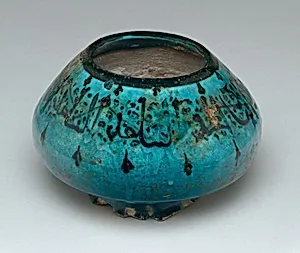
Medium
Stonepaste; painted under transparent turquoise glaze
Dimensions
H. 4 11/16 in. (11.9 cm) Gr. Diam. 7 3/8 in. (18.7 cm)
Classification
Ceramics
Department
Islamic Art
Museum
Metropolitan Museum of Art, New York, NY
Credit
H.O. Havemeyer Collection, Gift of Horace Havemeyer, 1945
Accession Number
45.153.3
Rights
Public Domain
Art Historical Context
This elegant 13th-century stonepaste bowl, hailing from the Islamic world, exemplifies the masterful ceramics of the medieval Middle East. Standing just under 5 inches tall with a generous 7⅜-inch diameter, its shallow form and luminous turquoise glaze invite everyday use while showcasing artistic refinement. The stonepaste body—a finely ground mixture of quartz, clay, and frit—allowed artisans to create a durable, porcelain-like surface that was translucent and ideal for intricate designs painted beneath the glaze before firing. Developed in the 12th-13th centuries, particularly in regions like Iran and Syria, stonepaste ware marked a pinnacle of Islamic ceramic innovation. It overcame the limitations of local clays, enabling vibrant underglaze painting and glossy finishes that rivaled coveted Chinese imports. The signature turquoise glaze, evoking the sky or precious gems, was a hallmark of Persian potters, symbolizing luxury and spiritual beauty in a era of cultural flourishing under Seljuk and early Mongol rule. Now part of the Metropolitan Museum of Art's renowned Islamic Art collection—thanks to the H.O. Havemeyer Collection gift in 1945—this anonymous masterpiece whispers of bustling workshops and vibrant bazaars, connecting us to the ingenuity of artisans who blended utility with artistry over 800 years ago.