
Bowl
Unknown Artist
13th century
Medium
Stonepaste
Dimensions
H. 3 11/16 in. (9.4 cm) Diam. 8 5/8 in. (21.9 cm) Wt. 11.2 oz. (317.6 g)
Classification
Ceramics
Department
Islamic Art
Museum
Metropolitan Museum of Art, New York, NY
Credit
Rogers Fund, 1963
Accession Number
63.16.1
Rights
Public Domain
Tags
Art Historical Context
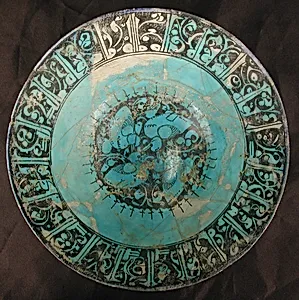
This elegant 13th-century stone bowl, hailing from the Islamic world, exemplifies the refined ceramic artistry of the medieval Islamic period. Measuring just under 4 inches tall and 8.5 inches in diameter, its lightweight form (11.2 ounces) made it ideal for daily use while showcasing exceptional craftsmanship. Crafted using stonepaste—a composite of quartz, clay, and frit—this medium allowed artisans to achieve a durable, ivory-white body perfect for vibrant underglaze painting and glossy turquoise or blue glazes, techniques pioneered in regions like Iran and Syria during the Seljuk era. Bird motifs, a recurring tag for this piece, adorn its surface, reflecting the Islamic reverence for nature and paradise gardens evoked in poetry and scripture. These graceful designs not only served decorative purposes but also symbolized freedom, beauty, and spiritual harmony, common in Abbasid and post-Mongol ceramics. As part of the Metropolitan Museum of Art's Islamic Art collection (acquired via the Rogers Fund in 1963), this anonymous masterpiece highlights how everyday objects became canvases for profound cultural expression, bridging utility and artistry in a golden age of innovation.